Showing posts with label Ottoman. Show all posts

Wednesday, 28 February 2024

Ottoman Infantry

 This post looks at the first unit recruited in to my Ottoman army for the Khotyn 1621 project.

28mm figures from Warfare Miniatures - casualty from Warlord Games

The start of this years’ hobbying has involved lots of research into the Ottoman army.  I have been scouring the various Helion, Osprey and other books / websites that I have been able to find regarding the 16/17th Ottomans.  It is not straightforward to decipher an order of battle, or even a clear definition of the troop types.  I have had to adopt a level of pragmatism to allow me to press on with getting some figures on the table.

A quicker painting approach than normal was used for this unit.


Research, Thoughts, and Decisions

I have decided to simply split the infantry in to two categories: the Janissaries, and the provincial infantry (the Serhaddkulu infantry).   The non-Janissary infantry was actually made up from a bewildering array of different recruitment sources.  Their exact make up and numbers was not clearly documented at the time
and is very hard to tie down now.  Despite the variety of recruitment methods, their use on the battlefield seems to have been fairly uniform.  Ottoman commanders seem to have wanted more musket armed infantry to support, or stand in for, the musket armed Janissaries.  I decided it would become a bit arbitrary to try and differentiate amongst the different types of non-janissary infantry and so, to start with, I’m just going to have two flavours in the army.  More efficient and effective musket armed foot, the Janissaries, and less efficient/effective foot, the provincials. 

(It seems that as the 17th century continued some of the non-Janissary infantry started to rival and possibly even supplant the Janissaries as the better troops.  This makes no difference to my force as I will still have some better infantry and some worse.)

The next thing was to look at clothing / uniforms.  This was even more confusing! The fancy Janissary uniform, with the amazing head-dress, is well known by figure manufactures and is commonly pictured in books. The easy route would be to have used this full dress costume for the Janissaries and something else of the others types of infantry. However I couldn’t get away from the suggestion that, in action, the Janissaries didn’t risk their fancier outfits, and instead wore an irregular selection of what ever they preferred.  This means they would probably look very similar to the provincial / Serhaddkulu infantry, if subtly better dressed / armed. 

As I still wanted to be able to easily see the difference between the infantry types on the table I made the somewhat arbitrary choice to base them differently rather than have different figure types.  The Janissaries / effective infantry will be on my regular 40mm square bases, with 4 figures to a base.  The provincial / less-effective infantry will be on 60mm squares with 6 figures on a base (as I have done for my irregular Scottish Highlanders).  So even if the figures look very similar, the different formations / base sizes will distinguish the two basic types of infantry. 

There are two caveats that I have made to this attractively simple approach. One is the formation of special ‘volunteer’ storming parties that were formed before some of the assaults at Khotyn. To represent these I may have some special units on the 60mm square bases - I’m still thinking about this.  The second caveat is the dismounting of the Ottoman cavalry to take part in assaults.  This is also a challenge to consider in the future.

Flags are from Warfare Miniatures and Wargames Designs.


The First Unit

Following the planning above I settled on ordering some figures from Warlord Games, Warfare Miniatures, The Assault Group, and also Perry Miniatures, all of which have Ottoman  infantry ranges.  The Perry range is aimed at the end of the 18th / beginning of the 19th century, but by choosing some of the ‘irregular’ codes they appear to me to be useable for the 17th century.  The muskets should probably be matchlocks but it’s pretty hard to tell at this size of figure and so I’m willing to over look this as the figures are so nice. Warfare and Perry look like they will mix in units quite nicely, but are both a little taller than the TAG figures.  Warlord are between the two extremes. I may not mix TAG in the same units with Warfare/Perry, but keep them in their own units. 

Some disagreement may be? 

The first unit off the painting table are all Warfare miniatures.  Even with my simplified approach to Ottoman infantry I am still going to need a lot of them and so I had a hard think about how to paint them.  The previous unit I had painted were some Bloody Minis on which I had lavished quite a lot of time.  This was great fun, but made my already slow painting pace even slower. For the Ottomans I decided to have a go at a potentially quicker approach; the under-painting / zenithal highlighting / slap-chop technique that has become very popular in recent years.  There are some great explanations online about this approach and probably my favourite is by Stuart at Miniature Realms - take a look at his YouTube channel here - link.

28mm Perry Miniature primed in dark brown by hairy brush.

Heavy dry brush with Tan Earth.

Lighter dry brush with Wraithbone.

Rather than use an airbrush to prime and undercoat the figures, as Stuart does with black to white, I have primed in my regular dark brown by brush, and then dry brushed up through tan to off white.  This dry brush means that the more translucent ‘Contrast’ types paints give a one coat, quite contrasty, shaded look to the figures.

It is certainly possible to take things a stage further, as Stuart shows, by adding further highlights over the one coat of contrast.  However this takes precious time.  I did try this on the command base, and I think the final look of the figures benefits from the extra attention.  However, for the rank and file, and to get them on the table quicker, I will try and stick to a one-and-done approach. They do not look like my best work, but I think they are serviceable once on the table. 

28mm Ottoman casualty by Warlord Games on a Warbases counter base.

From this first unit I would say they take at most half the time of my regular approach (base coat over brown prime, wash, then highlights). 


In Conclusion

The start of the project has been, as I suppose is normal for me, quite slow and involved much time decision making.  Hopefully I can pick up the pace a bit now, and start getting some infantry units done.  Up next are … more Ottoman infantry. 


Until next time!


Andy @ The Friends of General Haig (FoGH)

Thursday, 11 January 2024

New Project: The Khotyn Campaign - 1621

A New Year and a new hobby project; this time it is the Khotyn campaign of 1621 that pits the Polish-Lithuanian Commonwealth against the mighty Ottoman Empire. To celebrate this new project I have a book to giveaway, read on for more information.


Book Giveaway

The book, ‘The Khotyn Campaign of 1621’ by Michał Paradowski and published by Helion, is part of the inspiration for the new project.  Michał was kind enough to offer me a copy of his latest book as a giveaway.  To win this free copy of the fabulous book all you need to do is comment on this blog post, or one of its social media announcements, before midnight GMT on 2nd February 2024.  I will then pick a winner at random from across the various channels. (Sorry - you’ll need to be in the UK to win the book as posting it internationally is too tricky.) Good luck! 

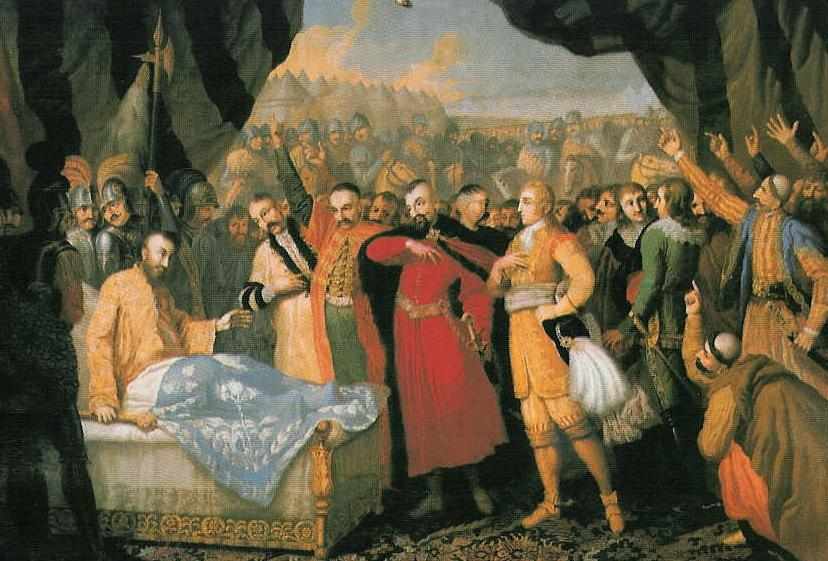
Battle of Chocim, 1621 by Józef Brandt.

Note. The place name ‘Khotyn’ can appear differently in various local languages (e.g. Polish: Chocim, Romanian: Hotin, Ukrainian: Хоти́н ). It is most easily pronounced in English as ‘Hot-in’.


A Mini Book Review 

I highly recommend this book to anyone with even a passing interest in the conflicts of Eastern Europe in this period.  The book provides the historical background to the campaign (including the campaign in the previous year in which the Polish-Lithuanian Commonwealth suffered a disastrous defeat), as well as describing the army commanders and all of the armies involved.  There is then a detailed account of the campaign itself accompanied by useful maps and lots of information on the orders of battle.  The book is illustrated throughout including many period pictures, as well as some beautiful colour pieces by Sergey Shamenkov that were commissioned for the book. There are a number of fascinating appendices and the whole work is thoroughly served with excellent foot notes.  

As well as its qualities as a reference work the book is very readable as a narrative account and I devoured it in 3 or 4 sittings.  The chapter on the campaign between 2nd September and 9th October 1621 was a definite page turner with the day-by-day action unfolding in an increasingly bloody and desperate affair. For a wargamer looking at this conflict, or period, the book is ideal. It not only provides lots of the details we all crave about armies and battles, but also illuminates the historical background and context for our games.

I very much look forward to Michał's future work with my only regret being that I can't build armies and terrain as fast as he can research and write books! If you're not lucky enough to win the free giveaway copy then you can of course buy a copy from the Helion website here. 

Defending the Polish Banner at Khotyn by Juliusz Kossak.


Brief Campaign Background

"The battle was terrible and perilous, for our men were in amongst the enemy, and the dead bodies heaped upon another like bridges"
From issue 171 of Nieuwe Tijdinghen published in Antwerp, November 1621

Khotyn 1621 is perhaps not very well known despite being a major and bloody encounter between two of the major powers in the region. For a proper description then you should read the book.  There is also an interesting video available on YouTube from the SandRhoman History channel here. 

Here is my two minute, summary background.

The campaign was due to an escalation of border tensions between the Polish-Lithuanian Commonwealth and the Ottoman Empire, and followed the disastrous defeat of a Polish army in 1620.  Emboldened by this victory, the new Ottoman sultan Osman II, who was still a teenager, mobilised an enormous army ready for the next campaign season in 1621. From the Ottoman capital, Istanbul, he joined the army in person and marched North in the hope of achieving a personal military victory to bolster his insecure political position.

Shocked by the 1620 defeat the Polish King, Sigismund III Vasa, received the support of the Polish-Lithuanian Sejm (parliament) to raise a new force from across the Commonwealth, and to recruit their Cossack allies.  The Lithuanian Grand Hetman Chodkiewicz marched the Commonwealth forces South to the border with Moldavia. Chodkiewicz then crossed the Dniester river in to Moldavia and picked a strong defensive position the southern bank, next to the castle and village of Khotyn. 

Osman advanced towards the Commonwealth forces, along with his Tartar allies, determined to quickly crush all opposition. At the beginning of September the Ottoman forces started to arrive at Khotyn and found the Commonwealth forces and allies behind prepared defences. There then followed a series of attacks by the Ottomans, with counter-attacks and sorties from the Commonwealth, that went on for over a month. By the start of October both sides were exhausted and a peace treaty was agreed. Although tactically a stalemate, the campaign was a strategic success for the Commonwealth who had regained their honour from the previous year's defeat, and managed to hold off the humbled Ottoman army. Osman was forced to head back to Istanbul with nothing to show for his costly campaign. 

The campaign saw the death of the both protagonists' leaders. Chodkiewicz died during the campaign through illness, and Osman was deposed and murdered in the following year, his position now untenable amid competing factions within the court.

"Now a crown hangs above the sabre,
Now the sabre falls upon the crown,
Now the slaves rises to an empire,
And the erstwhile emperor becomes a slave."
From the poem Osman by Ivan Gundulić written, between 1622-1651.

The Death of Chodkiewicz by Franciszek Smuglewicz.


New Hobby Project - Khotyn 1621

So why have I picked this campaign to be the basis of my latest hobby project?  First of all it pivots neatly from my last project, Dirschau/Tczew 1627 (see the culmanation of this here), and will allow me to use the Polish-Lithuanian force that I have just built up.  This is a definite boon when you’re building both forces for a battle.  

Secondly, Khotyn sees the Polish-Lithuanian Commonwealth engaged with the huge Ottoman Empire. Since starting to explore the history of the 17th century Poles, I have also become fascinated with their great rivals to the South.  The Polish-Lithuanian Commonwealth were exotic and different when I was looking at the Western armies in the Thirty Years War, and now the Ottomans take that fascination a step further.

Finally, the Khotyn campaign, with the main actions taking place between 2nd September and 9 October, is chock full of interesting aspects that will make this an engaging, long-term project.  

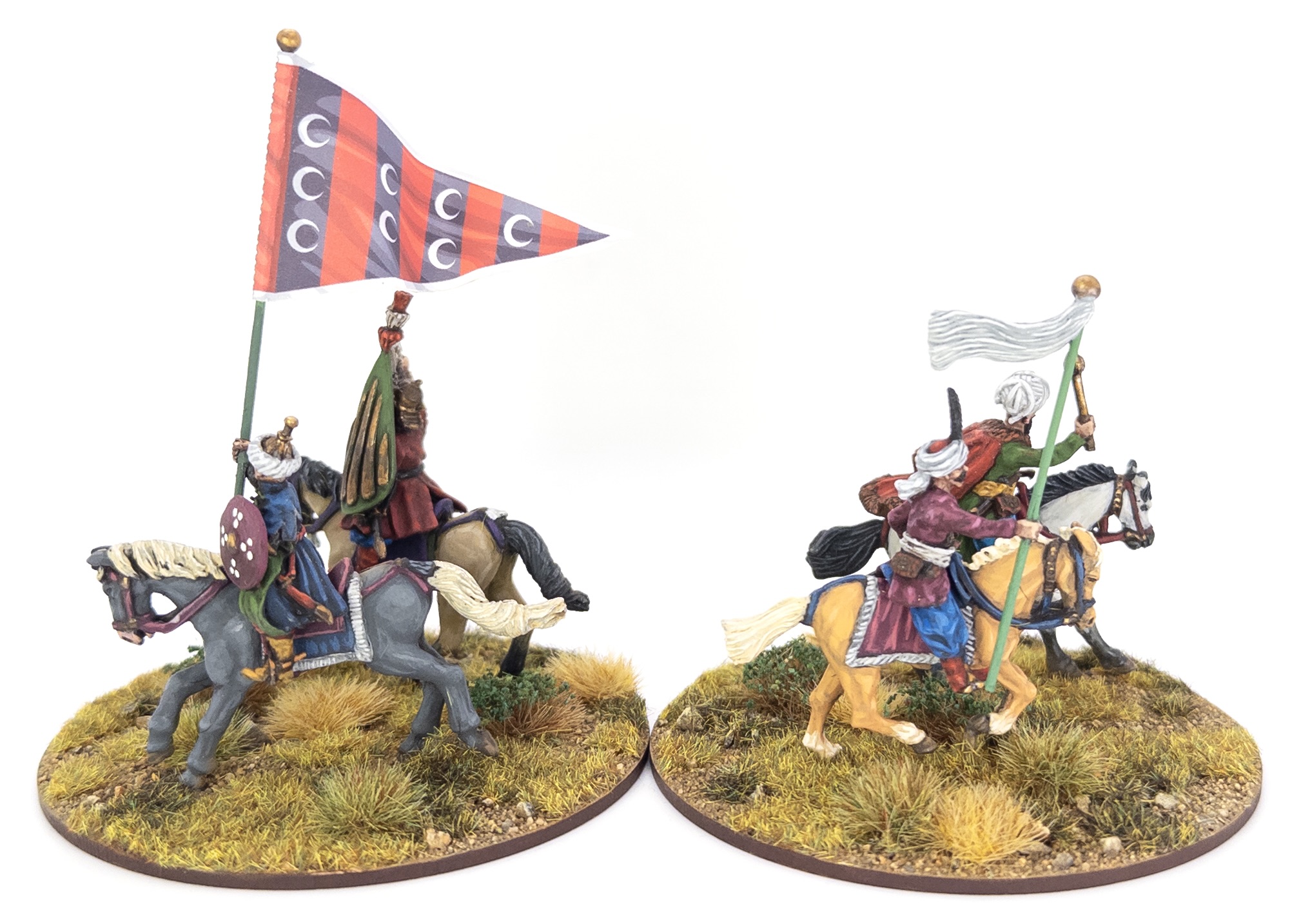
Ottoman Command 28mm - The Assault Group (left) and Warfare Miniatures (right).


Hobby Project Objectives

What I are my hopes and aims for the new project?  The main objective is to be able to able to recreate an action, or actions, from the Khotyn campaign on the table top. There are no time limits or expected force sizes, at the moment, although this may evolve overtime. 

After my early investigations here are the things that I am initially looking forward to exploring through the project:

  • Four different armies: The Polish-Lithuanian Commonwealth with an allied Cossack force, and the Ottomans with an allied Tartar force. These feature lots of new types of troops to collect, paint, and work out how to use on the tabletop.

  • A variety of types of engagement to represent on the tabletop, for example: attacks on fortifications, counter-attacks, sorties, open field engagements, and night attacks. 

  • Interesting terrain options to populate the tabletop such as: a medieval castle, a fortified Orthodox Church, fieldworks, wagon forts, a major river (the Dniester) and bridges of boats.

  • Regular followers of the blog may have realised that I like adding tabletop vignettes as colourful backgrounds to games.  Recreating the Ottoman camp will provide opportunities for some really interesting vignettes including: elephants and camels in the camp, the Sultan’s tents and guards, and a morale boosting Ottoman band (possibly partly mounted on the elephants!).  

Ottoman Command 28mm - The Assault Group (left) and Warfare Miniatures (right).


First New Figures


The first thing I’m tackling is to build an Ottoman force.  I’ll then be able to start playing some games against my existing Poles, and learning about how the different troop interactions work on the tabletop. 

Sprinkled through this post you will see the first Ottoman figures completed for the new project; two command bases. In previous projects I have omitted doing command bases and then found I have enough troops done for a game, but there are no generals to command them.  Hoping to avoid that particular pitfall this time! 

I have used figures from The Assault Group and Warfare Miniatures for the two bases.  Just painting these few figures has thrown up lots of questions that have required me to start researching what the Ottomans may have worn in this period and this is very useful as I start to plan for more Ottoman troops.

Ottoman Command 28mm - The Assault Group (left) and Warfare Miniatures (right).


Initial Hobby Plans


At this point of the project I’m doing more reading than buying or painting figures. I’m trying to get a sense of Ottoman uniform / dress for the period and the types of troops that are likely to have been at Khotyn.  I’ve started looking at the different Ottoman ranges available in 28mm and there are quite a few.  It feels like some of the ranges are a bit limited in the variety of troop types and/or poses.  I’ve also been looking at Middle Eastern ranges in general, from the Crusades through to Colonials to see if there are any suitable figures there.

I expect to order a few figures to start with, as samples, because it often makes a difference to see figures ‘in the flesh’.  It will also be useful to see how different manufacturers can be mixed together, especially in the same unit. 

While all of this is going on I have plenty of ECW/TYW figures in the existing ‘pile of potential’ so, I will not run out of things to paint, and some of these figures may be useable as the Foreign/German troops that were fighting for the Polish-Lithuanian army.  I might even be able to keep some of my previous projects going in parallel with this new project, although I’ve not been very good at juggling projects in the past. 

Ottoman Command 28mm - The Assault Group (left) and Warfare Miniatures (right).


Finally


Well done for getting through to the end of the post! I would be very interested to hear people’s thoughts on collecting 28mm Ottomans; which are your preferred figure ranges?  It would also be useful to hear about any books people recommend, especially uniform/dress guides.  

Don’t forget to comment to be in with a chance of winning a copy of the book!  

If you find it difficult to comment on Blogger posts then you could try to comment on one of the related Social media posts:

X / Twitter - link
Facebook - link
Lead Adventure Forum - link
The Miniature Page - link

Ottoman Command 28mm - The Assault Group (left) and Warfare Miniatures (right).


Until Next Time,

Andy @ The Friends of General Haig (FoGH)