Showing posts with label Polish. Show all posts

Friday, 16 February 2024

“Mighty fair description of men without horses …”

(A quote from MacIntosh, played by Burt Lancaster, in ‘Ulzana’s Raid’. The quote has no relevance other than describing mounted warriors being on foot!)

28mm figures from Bloody Miniatures

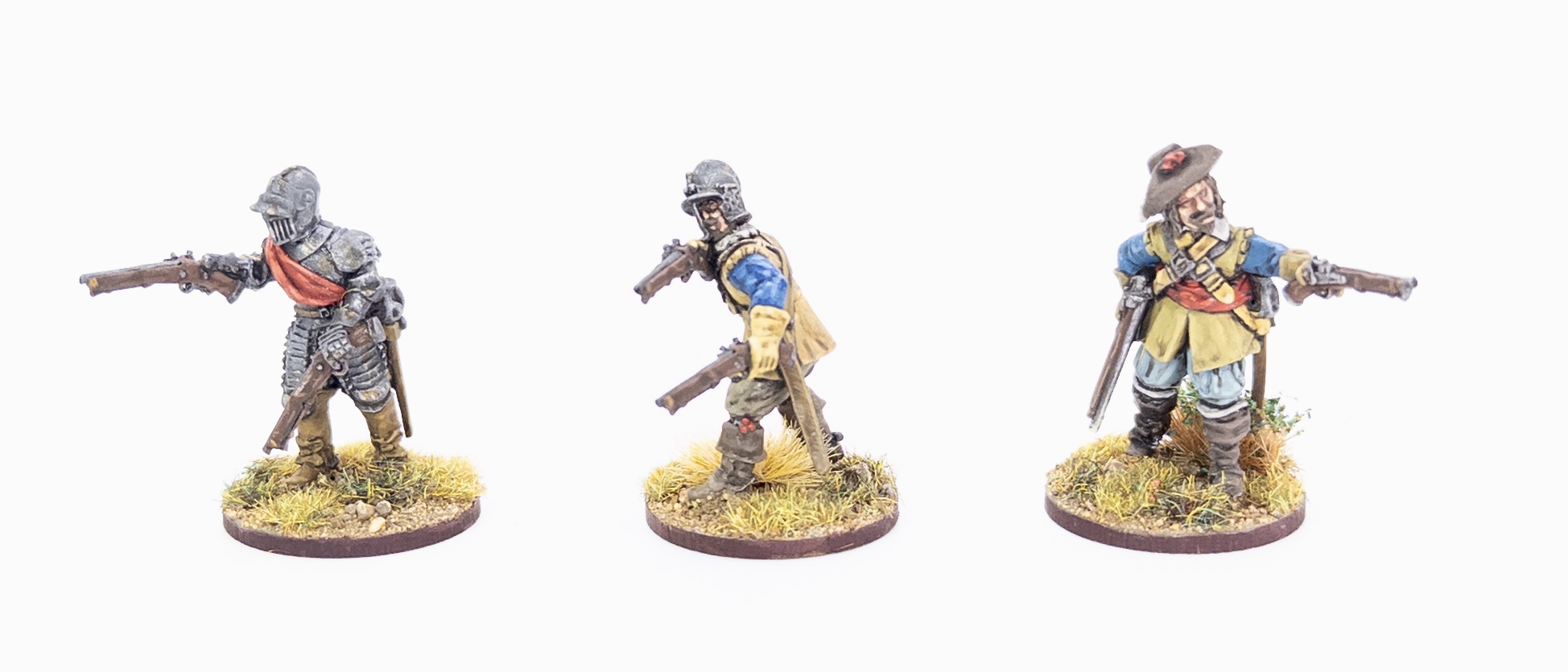
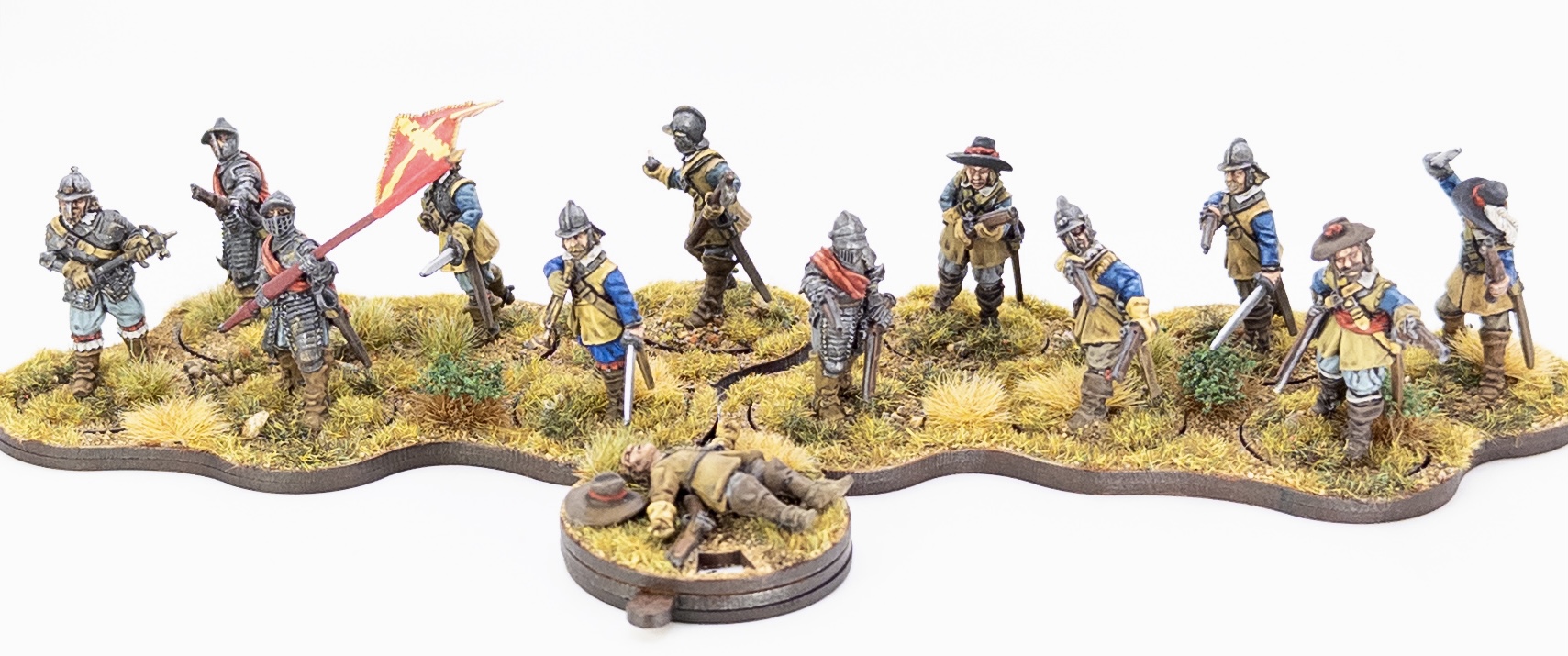
This post looks at the latest unit coming from my painting table; a unit of dismounted Polish Rajtar (Reiter) for the Khotyn 1621 campaign.

Inspiration 

The inspiration for this unit was two-fold. Firstly I was looking for a reason to paint another batch of the stunning Bloody Miniatures that have been accumulating in the pile-of-opportunity.  They really are a joy to paint.  Secondly I was inspired by reading about the actions at Khotyn in September 1621.  As the month went on the assaults and sallys that took place became more and more desperate.  Much of the fighting involved the storming and counter-storming of the Polish defensive earthworks. Every available soldier was required in these actions and this led to both sides dismounting their horsemen to add to the fighting strength.

The command party with officer, cornet and trumpeter.


Horsemen, but on foot

The dismounting of cavalry to storm, or defend, fortifications in this period  was fairly common. Their armour, firearms, and more elite status no doubt added to their effectiveness in the role. I have used a mixture of Bloody Miniature figures to form this unit, including figures in three-quarters (or cuirassier) armour, back and breast plates with buff coats, or just buff coats.  To add to the dismounted horseman feel I also chose figures in the long bucket-top boots, a definite period indicator of a rider. (If dismounted troops had the choice then this form of footwear would not have the been the best choice for clambering over earthworks, or to aid agility, but let’s say they had not brought spare shoes with them!) 

Some handy options for fighting in fortifications: armour, extra powder and grenades!


Building the unit

The Rajtar units in the Polish-Lithuanian Commonwealth armies were typically recruited from Germany.  They probably wore a mixture of armour, based on what they could afford and personal choice.  I also avoided three barred ‘English Pot’ helmets to keep the continental feel.  The only light conversions needed were to make a trumpeter and a cornet to carry the troop’s colour. These were fairly straightforward.  The trumpet came from a Warlord plastic cavalry sprue. (I’m not sure that dismounted troopers would have bothered with a trumpet and their cornet/colour in this more brutal and disorganised fighting ‘in the breech’. However, it was fun to show these types dismounted as well.)

Making the most of cavalry short range firepower


Painting

I painted the troopers in fairly neutral colours, with a vague blue theme based on nothing more than personal choice.  I have shown the buff coat wearers in sleeveless buff-coats, for this earlier 17th century period, by painting coloured coat sleeves.  Scarves (sashes) and other clothing accents were painted red / scarlet to help tie in with an Imperial theme, in case I want to use the unit in my Wallenstein Imperial army for Thirty Years War battles. Red is also nice colour accent against the dark, greyish armour and blue, grey clothing. The cornet/colour is from the Flags of War Imperial Thirty Years War range, with some battle damage added.

With carbine, swords and pistols.


Basing

The figures are based individually on 2 pence piece size bases and I have made up some sabot bases as well (all from Warbases).  This gives a suitably pell-mell feel to a unit that will be required to carry out some desperate actions in difficult circumstances, as well as in difficult terrain. I included a casualty marker on a Warbases 40mm counter base. The casualty is from the Bicorne ECW range. His discarded pistol is from the Bloody Minis spare equipment packs, and his lost hat is from the ‘spare bits’ box. 

Casualty from Bicorne Miniatures, on a Warbases counter base.

Khotyn 1621 Project Update

In other Khotyn 1621 project news, I have been researching the Ottoman army and buying a few figures to investigate options and possibilities. Thank you to everybody who has made recommendations.  So far I have selections of figures from Warlord Games, Warfare Miniatures, The Assault Group (TAG), Perry Miniatures, and Fireforge Games, as well as some 3D prints from various designers all printed by the super-helpful Paul at Sabotag3D Wargames Accessories.

The whole outfit - in their sabot bases (also from Warbases).

Book Competition Winner

Regular readers will remember that in the previous post (here) I offered a copy of Michal Paradowski’s Khotyn 1621 book from Helion as a prize to a commenter on the post (on any of the social media channels in which it appeared).  The commenters were added to a spreadsheet and a winner was chosen at random.  Many congratulations to Danny Buck who commented on Twitter.  You can see Danny enjoying his book below, and you can follow him on Twitter / X here: @DannyBuckUEA  

Many thanks to Michal for providing the book as a prize, and also many thanks to all of the commenters who took part across X, Facebook, TMP, LAF and here on Blogger.

Dr. Danny Buck with his prize! 

The next unit on the painting table should be Ottoman, and I look forward to discussing my initial choices in figures and paint schemes in the next post.


Until next time,
Andy @ The Friends of General Haig. 


Thursday, 11 January 2024

New Project: The Khotyn Campaign - 1621

A New Year and a new hobby project; this time it is the Khotyn campaign of 1621 that pits the Polish-Lithuanian Commonwealth against the mighty Ottoman Empire. To celebrate this new project I have a book to giveaway, read on for more information.


Book Giveaway

The book, ‘The Khotyn Campaign of 1621’ by Michał Paradowski and published by Helion, is part of the inspiration for the new project.  Michał was kind enough to offer me a copy of his latest book as a giveaway.  To win this free copy of the fabulous book all you need to do is comment on this blog post, or one of its social media announcements, before midnight GMT on 2nd February 2024.  I will then pick a winner at random from across the various channels. (Sorry - you’ll need to be in the UK to win the book as posting it internationally is too tricky.) Good luck! 

Battle of Chocim, 1621 by Józef Brandt.

Note. The place name ‘Khotyn’ can appear differently in various local languages (e.g. Polish: Chocim, Romanian: Hotin, Ukrainian: Хоти́н ). It is most easily pronounced in English as ‘Hot-in’.


A Mini Book Review 

I highly recommend this book to anyone with even a passing interest in the conflicts of Eastern Europe in this period.  The book provides the historical background to the campaign (including the campaign in the previous year in which the Polish-Lithuanian Commonwealth suffered a disastrous defeat), as well as describing the army commanders and all of the armies involved.  There is then a detailed account of the campaign itself accompanied by useful maps and lots of information on the orders of battle.  The book is illustrated throughout including many period pictures, as well as some beautiful colour pieces by Sergey Shamenkov that were commissioned for the book. There are a number of fascinating appendices and the whole work is thoroughly served with excellent foot notes.  

As well as its qualities as a reference work the book is very readable as a narrative account and I devoured it in 3 or 4 sittings.  The chapter on the campaign between 2nd September and 9th October 1621 was a definite page turner with the day-by-day action unfolding in an increasingly bloody and desperate affair. For a wargamer looking at this conflict, or period, the book is ideal. It not only provides lots of the details we all crave about armies and battles, but also illuminates the historical background and context for our games.

I very much look forward to Michał's future work with my only regret being that I can't build armies and terrain as fast as he can research and write books! If you're not lucky enough to win the free giveaway copy then you can of course buy a copy from the Helion website here

Defending the Polish Banner at Khotyn by Juliusz Kossak.


Brief Campaign Background

"The battle was terrible and perilous, for our men were in amongst the enemy, and the dead bodies heaped upon another like bridges"
From issue 171 of Nieuwe Tijdinghen published in Antwerp, November 1621

Khotyn 1621 is perhaps not very well known despite being a major and bloody encounter between two of the major powers in the region. For a proper description then you should read the book.  There is also an interesting video available on YouTube from the SandRhoman History channel here

Here is my two minute, summary background.

The campaign was due to an escalation of border tensions between the Polish-Lithuanian Commonwealth and the Ottoman Empire, and followed the disastrous defeat of a Polish army in 1620.  Emboldened by this victory, the new Ottoman sultan Osman II, who was still a teenager, mobilised an enormous army ready for the next campaign season in 1621. From the Ottoman capital, Istanbul, he joined the army in person and marched North in the hope of achieving a personal military victory to bolster his insecure political position.

Shocked by the 1620 defeat the Polish King, Sigismund III Vasa, received the support of the Polish-Lithuanian Sejm (parliament) to raise a new force from across the Commonwealth, and to recruit their Cossack allies.  The Lithuanian Grand Hetman Chodkiewicz marched the Commonwealth forces South to the border with Moldavia. Chodkiewicz then crossed the Dniester river in to Moldavia and picked a strong defensive position the southern bank, next to the castle and village of Khotyn. 

Osman advanced towards the Commonwealth forces, along with his Tartar allies, determined to quickly crush all opposition. At the beginning of September the Ottoman forces started to arrive at Khotyn and found the Commonwealth forces and allies behind prepared defences. There then followed a series of attacks by the Ottomans, with counter-attacks and sorties from the Commonwealth, that went on for over a month. By the start of October both sides were exhausted and a peace treaty was agreed. Although tactically a stalemate, the campaign was a strategic success for the Commonwealth who had regained their honour from the previous year's defeat, and managed to hold off the humbled Ottoman army. Osman was forced to head back to Istanbul with nothing to show for his costly campaign. 

The campaign saw the death of the both protagonists' leaders. Chodkiewicz died during the campaign through illness, and Osman was deposed and murdered in the following year, his position now untenable amid competing factions within the court.

"Now a crown hangs above the sabre,
Now the sabre falls upon the crown,
Now the slaves rises to an empire,
And the erstwhile emperor becomes a slave."
From the poem Osman by Ivan Gundulić written, between 1622-1651.

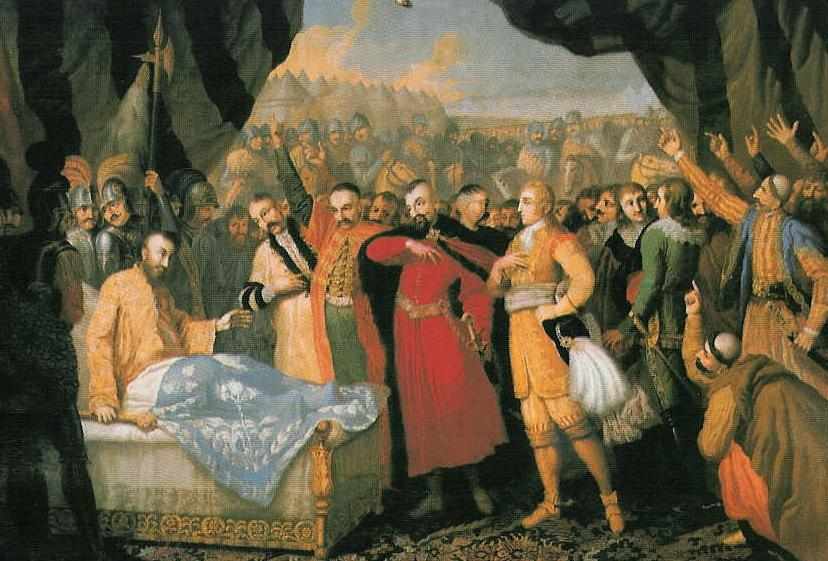
The Death of Chodkiewicz by Franciszek Smuglewicz.


New Hobby Project - Khotyn 1621

So why have I picked this campaign to be the basis of my latest hobby project?  First of all it pivots neatly from my last project, Dirschau/Tczew 1627 (see the culmanation of this here), and will allow me to use the Polish-Lithuanian force that I have just built up.  This is a definite boon when you’re building both forces for a battle.  

Secondly, Khotyn sees the Polish-Lithuanian Commonwealth engaged with the huge Ottoman Empire. Since starting to explore the history of the 17th century Poles, I have also become fascinated with their great rivals to the South.  The Polish-Lithuanian Commonwealth were exotic and different when I was looking at the Western armies in the Thirty Years War, and now the Ottomans take that fascination a step further.

Finally, the Khotyn campaign, with the main actions taking place between 2nd September and 9 October, is chock full of interesting aspects that will make this an engaging, long-term project.  

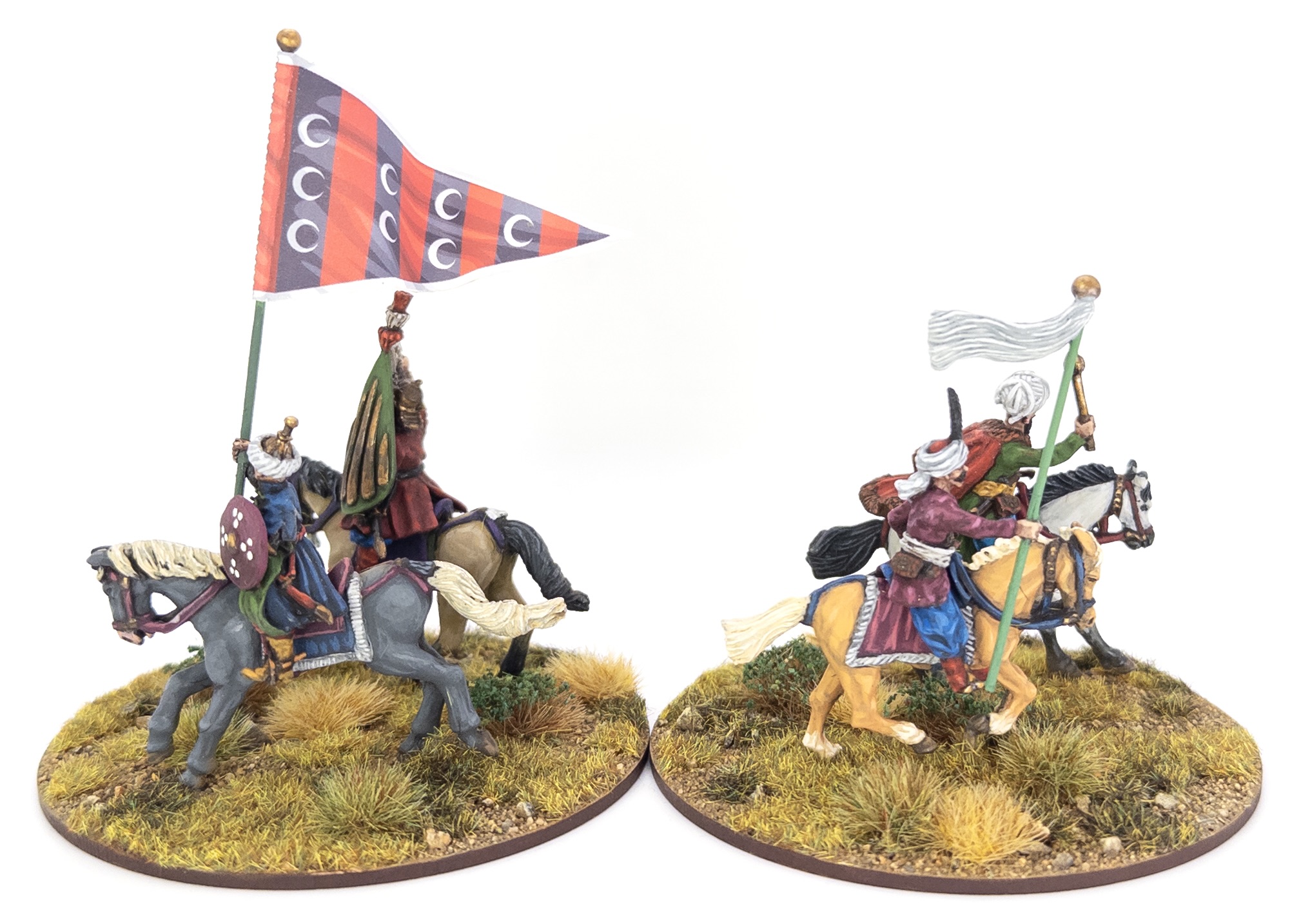
Ottoman Command 28mm - The Assault Group (left) and Warfare Miniatures (right).


Hobby Project Objectives

What I are my hopes and aims for the new project?  The main objective is to be able to able to recreate an action, or actions, from the Khotyn campaign on the table top. There are no time limits or expected force sizes, at the moment, although this may evolve overtime. 

After my early investigations here are the things that I am initially looking forward to exploring through the project:

  • Four different armies: The Polish-Lithuanian Commonwealth with an allied Cossack force, and the Ottomans with an allied Tartar force. These feature lots of new types of troops to collect, paint, and work out how to use on the tabletop.

  • A variety of types of engagement to represent on the tabletop, for example: attacks on fortifications, counter-attacks, sorties, open field engagements, and night attacks. 

  • Interesting terrain options to populate the tabletop such as: a medieval castle, a fortified Orthodox Church, fieldworks, wagon forts, a major river (the Dniester) and bridges of boats.

  • Regular followers of the blog may have realised that I like adding tabletop vignettes as colourful backgrounds to games.  Recreating the Ottoman camp will provide opportunities for some really interesting vignettes including: elephants and camels in the camp, the Sultan’s tents and guards, and a morale boosting Ottoman band (possibly partly mounted on the elephants!).  

Ottoman Command 28mm - The Assault Group (left) and Warfare Miniatures (right).


First New Figures


The first thing I’m tackling is to build an Ottoman force.  I’ll then be able to start playing some games against my existing Poles, and learning about how the different troop interactions work on the tabletop. 

Sprinkled through this post you will see the first Ottoman figures completed for the new project; two command bases. In previous projects I have omitted doing command bases and then found I have enough troops done for a game, but there are no generals to command them.  Hoping to avoid that particular pitfall this time! 

I have used figures from The Assault Group and Warfare Miniatures for the two bases.  Just painting these few figures has thrown up lots of questions that have required me to start researching what the Ottomans may have worn in this period and this is very useful as I start to plan for more Ottoman troops.

Ottoman Command 28mm - The Assault Group (left) and Warfare Miniatures (right).


Initial Hobby Plans


At this point of the project I’m doing more reading than buying or painting figures. I’m trying to get a sense of Ottoman uniform / dress for the period and the types of troops that are likely to have been at Khotyn.  I’ve started looking at the different Ottoman ranges available in 28mm and there are quite a few.  It feels like some of the ranges are a bit limited in the variety of troop types and/or poses.  I’ve also been looking at Middle Eastern ranges in general, from the Crusades through to Colonials to see if there are any suitable figures there.

I expect to order a few figures to start with, as samples, because it often makes a difference to see figures ‘in the flesh’.  It will also be useful to see how different manufacturers can be mixed together, especially in the same unit. 

While all of this is going on I have plenty of ECW/TYW figures in the existing ‘pile of potential’ so, I will not run out of things to paint, and some of these figures may be useable as the Foreign/German troops that were fighting for the Polish-Lithuanian army.  I might even be able to keep some of my previous projects going in parallel with this new project, although I’ve not been very good at juggling projects in the past. 

Ottoman Command 28mm - The Assault Group (left) and Warfare Miniatures (right).


Finally


Well done for getting through to the end of the post! I would be very interested to hear people’s thoughts on collecting 28mm Ottomans; which are your preferred figure ranges?  It would also be useful to hear about any books people recommend, especially uniform/dress guides.  

Don’t forget to comment to be in with a chance of winning a copy of the book!  

If you find it difficult to comment on Blogger posts then you could try to comment on one of the related Social media posts:

X / Twitter - link
Facebook - link
Lead Adventure Forum - link
The Miniature Page - link

Ottoman Command 28mm - The Assault Group (left) and Warfare Miniatures (right).


Until Next Time,

Andy @ The Friends of General Haig (FoGH)


Monday, 25 July 2022

Haiduks and Housing

This blog post is just a quick update on my 1620s Polish-Lithuanian Commonwealth army in 28mm.

28mm Polish Haiduks from The Assualt Group (TAG) and Foundry.

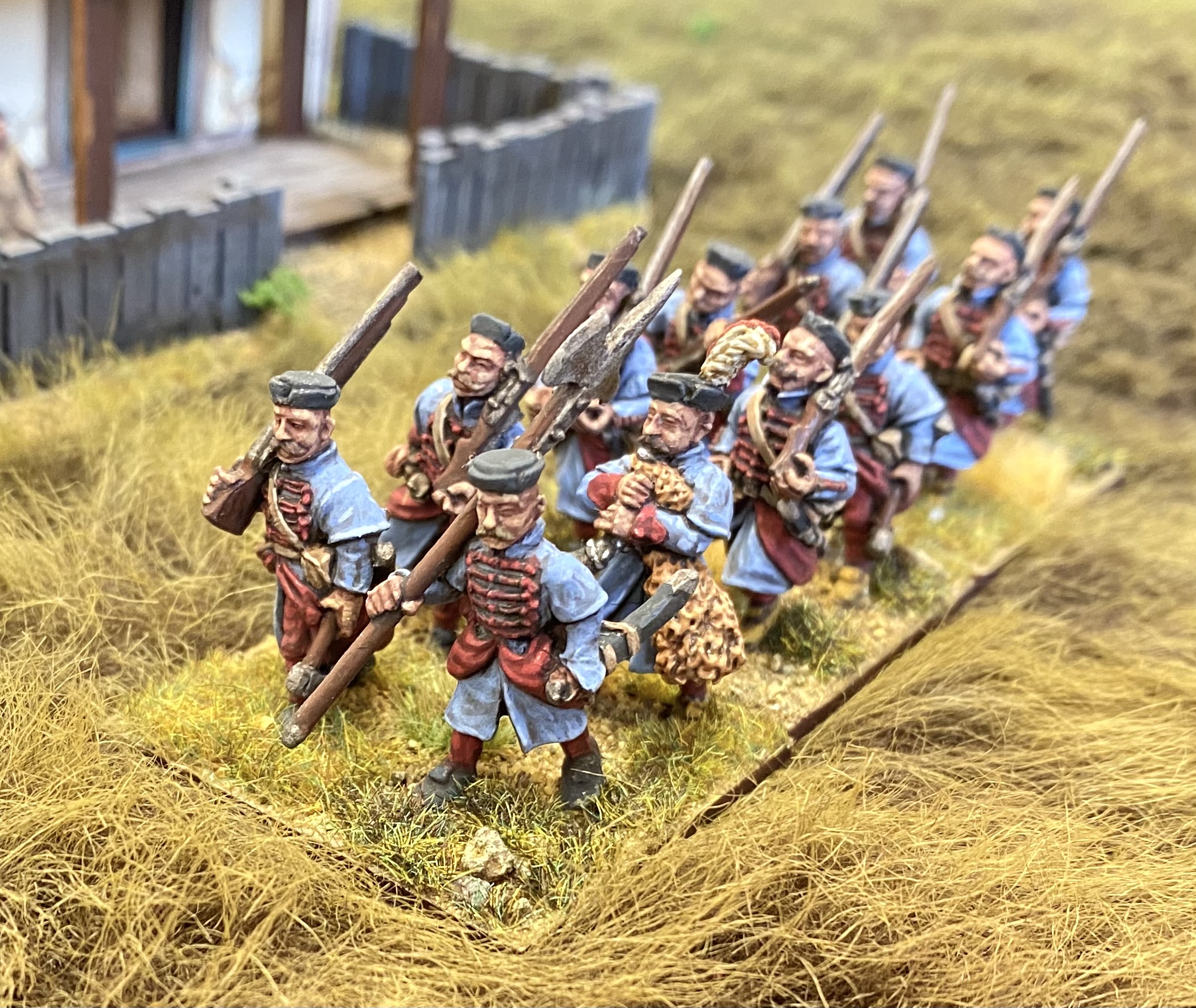
Slow progress over the last few weeks, but I have completed another unit of Haiduks, and I’ve also built a MDF cottage (from 4Ground) for use in my Polish v. Swedes games set in Prussia.

Marching through the Prussian countryside.

This is my third unit of Haiduks, and I have returned to the ‘classic blue plus red lining’ colour scheme for this unit.  (You can see some more details on Polish Haiduks in my first post on them here:  https://theviaregia.blogspot.com/2021/11/polish-haiduks.html .). The figures remain a mixture of The Assault Group (TAG) and Foundry.  This units uses marching poses from both manufacturers. 

When I was thinking of taking a few pictures of this latest unit of Haiduks I thought that it would be nice to have a rural looking house.  I have had this 4Ground MDF building in my stash for some time, and while intended for WW2 Eastern Front games, I thought it would also suit me for the 17th century. 

Eastern Front MDF building from 4Ground.  Built, primed, ready for finishing and some flock etc.

It is a very detailed kit as you’d expect from (the now sadly defunct) 4Ground, and was easy to build despite the detail.  One of the things that drew me to this model was the teddy-bear fur thatched roof, with the fur provided.  Once the material was stuck on to the roof, I brushed in a lot of PVA to the fur, and then painted it.  This was pretty straightforward and drying times much improved by the UK’s recent heatwave. 

Finished building populated with my Polish civilians.

I have left the cottage pretty much as it comes out of the box for the remainder of the kit, just splashing about some weathering. I built a base for the building using a Warbases 3mm scenery base, and the fencing was also supplied by 4Ground (from Things From The Basement).

Next up on the painting tray are more Swedish cavalry.

Until next time!

Andy @ The Friends of General Haig (FoGH).

Thursday, 14 April 2022

The Peasants Are Not Revolting

In this blog post I add some inhabitants for a typical 17th century Polish village that may appear on my miniature battlefields. 

Inhabitants for a Polish farm or hamlet, in 28mm.

As well as churning through units for the 17th century Polish and Swedish armies that I’m trying to recreate, I am in parallel thinking about the miniature battlefields that they will inhabit.  I think that some form of human habitation on the miniature battlefield does a lot to set the context of time and place for the overall scene.  As well as any buildings, adding some civilian inhabitants then helps to add further ‘colour’.  

There is quite a good selection of 17th century civilians available for Western European theatres. For example Warlord Games do a great selection of 17th century civilians, as well as armed ‘clubmen’.  Many other ranges have at least one or two figures available and, with civilian dress giving a bit more historical leeway than uniforms, it is also possible to add in civilian figures from some late 16th century, late 17th century, and even early 18th century ranges, with perhaps just a few tiny conversion. It is even possible to plunder  some manufacturers’ ‘fantasy’ ranges; a tip that I picked from the Too Fat Lardies - thanks Rich and Sidney!). 

Although parts of Prussian Poland were quite ‘German’ in this period, especially in the larger towns, I wanted some of my civilians to give a more East European feel. We’re not so lucky at the moment when it comes to Eastern Europe civilians in the catalogues of 28mm manufacturers.    I was therefore very happy to come across this small set of Eastern European civilians produced by an independent sculptor, Leon, advertised on The Lead Adventure Forum.

“How much?!”

The set includes women, men and children going about everyday tasks, a cart with horse and driver, and some pigs with piglets.  I thought that these figures would fit in really well to a rural farm or hamlet in the 17th century Polish Lithuanian Commonwealth. 

Chopping wood is thirsty work.

I painted the figures mostly in suitably drab colours to represent typical peasants living in the rural Polish-Lithuanian Commonwealth.  The women folk got slightly ‘nicer’ colours, and red head scarves. I based most of the figures on MDF round bases (from Warbases) sized to match the UK 2 pence piece. (Lockdowns etc. have seriously depleted by collection of 2ps!). Warbases do these bases with handy round holes, perfect for tiny magnets, so the resulting figures will sit safely in a Really Useful Box with an A4 magnetic sheet in the bottom.

Women folk out for a stroll.

I kept the basing of the figures mainly muddy earth, with the odd tuft, on the basis that they will usually be shown around the buildings and roads on the miniature battlefield.

Are these little piggies are going to market?

This set of figures made an interesting change from the martial units of figures I’m normally working on. I’m sure they will look great as the inhabitants of any hamlets in my miniature 17th century Polish-Lithuanian Commonwealth.  

I really like the cart model which comes with a horse and driver. The reins were added with thin strips of paper.

The cart is a metal model which went together fairly easily with superglue.  The cart has lots of detail on it so it was very easy to paint with washes and dry brushing. 

Next up on the painting table I’m back to more regular fayre with some Polish cavalry.

Got to load up that wagon before the Swedes get here! 

Until next time!

Andy @ The Friends of General Haig.


[Note.  At the time of publishing, April 2022, this range of civilian figures may not be available due to them coming from the Russian Federation. ]


Thursday, 31 March 2022

Commander Mikołaj Abrahamowicz

 This blog post covers the third command stand for my Polish-Lithuanian Commonwealth force from the 1620s; this commander representing Mikołaj Abrahamowicz (or Abramowicz ). 

Mikołaj Abrahamowicz with entourage; 28mm figures from Warlord, TAG, Foundry and 1898 Miniatures.

Abrahamowicz was one the Polish-Lithuanian ruling noble class, who’s family came from Smolensk in the Grand Duchy of Lithuania. He was unusual in being a Protestant and yet well connected and influential in Royal circles in this predominantly Roman Catholic country. 

By the later 1620s he was already a veteran military leader of some years experience.  He had been in charge of the Commonwealth’s artillery and was also associated with leading the ‘Foreign Infantry’ in the Army (see the entry here on the Foreign Infantry https://theviaregia.blogspot.com/2021/03/polish-lithuanian-foreign-infantry.html).  

“If you look carefully, Sir, you can see the Swedes about to break through just over there!”

He is often listed as one of the commanders at The Battle of Dirschau / Tzcew in 1627, and so he seemed an interesting candidate as my third command base.  With his Protestant background and close association with the western style, Foreign Infantry, I thought it would be interesting to have Abrahamowicz represented with a figure in western style dress and equipment.  I picked Warlord Games’ ‘Sir Arthur Haselrig’ figure from my ‘pile of opportunity’, to use as the man himself.  This figure, sculpted wearing cuirassier armour, looks every bit the part of a well armoured general of the 1620s or 30s.  He looks as if he is shielding his eyes from the bright sunlight, and staring in to the distance to study some detail of the battle.  This pose looked like it would go well with a TAG dismounted Polish cavalryman that I had, who was posed pointing out some important detail.  The two figures together had a nice narrative to their poses, and would also provide both a western and a Polish touch to the base. 

To finish off the base I used a spare Foundry horse to be the dismounted Polish cavalryman’s mount. I also added an 1898 TYW pikemen as an ensign to carry a personal standard for Abrahamowicz.  The standard is conjectural and another ‘nod’ to Abrahamowicz’s western influence.  The device on the flag is Abrahamowicz’s family crest, the white background representing a colonel’s colour, matching Abrahamowicz’s rank.

The Abrahamowicz crest added in to a typical wreath used on colonels’ colours of the period, on an (off) white field / background. 


The figures were all really nice to paint; and it was great being able to lavish a bit of extra time on a command base like this one.  Although the figures are all metal there was very little work required to get them ready for painting.  The one bit of ‘fiddling about’ was the reigns on the Warlord horse.  The reigns are cast as a single piece under the horse’s head.  I could have probably left this, but ended up drilling this single piece of metal to form the two separate reigns. 

The resulting base makes a distinct commander for my Polish-Lithuanian forces, and I look forward to getting him on to the miniature field of battle soon.

Note.  The idea for Abrahamowicz’s style of dress, and his coat of arms, result from an email conversation with Michal Paradowski of the Kadrinazi blog, and author of two wonderful Helion books on the Polish armies from this period.  Thanks to Michal for the great thoughts and ideas, and any mistakes in the resulting base are purely my own! 


The next subject on the painting table will take me to the other end of the social scale but is no less fun to paint.

Until next time!

Andy @ The Friends of General Haig (FoGH).


Sunday, 30 January 2022

More Haiduks

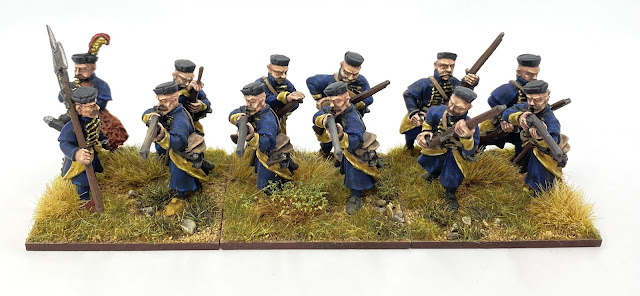
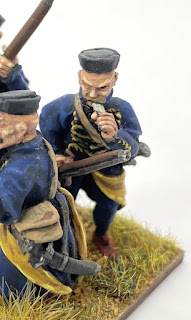
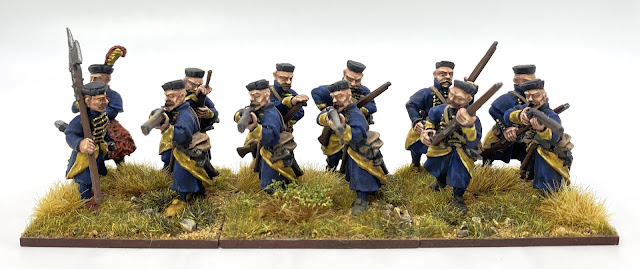
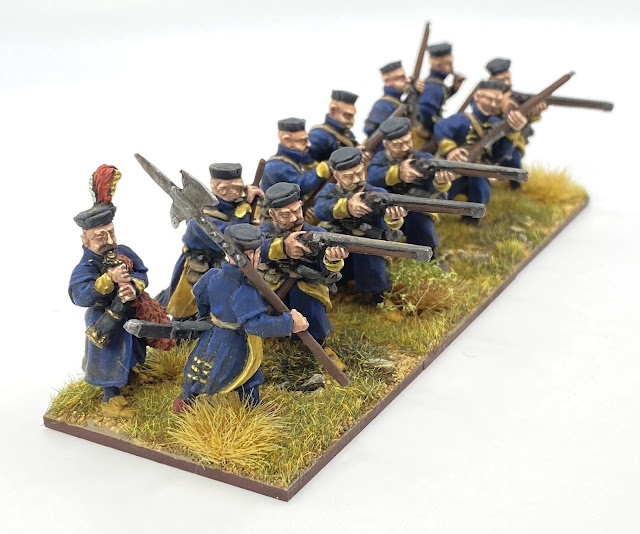
This blog post looks at the latest unit for my Polish Lithuanian Commonwealth army; another unit of Polish Haiduks. 

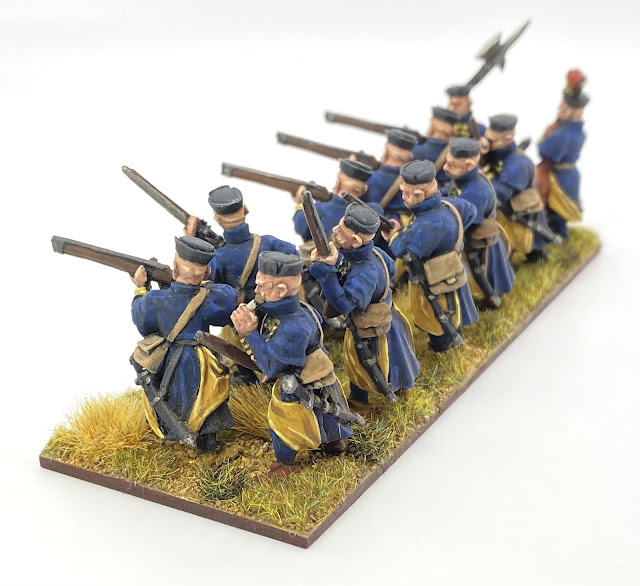
Polish Haiduks from Wargames Foundry and TAG in 28mm

In this earlier post (https://theviaregia.blogspot.com/2021/11/polish-haiduks.html) I described the background to these native Polish infantry. This unit is more of the same, with the figures also being from Wargames Foundry and The Assault Group (TAG) in 28mm.  

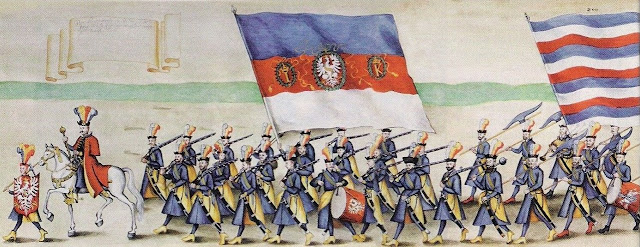
Extract from the contemporary ‘Stockholm Roll’ showing Haiduks

I chose a different paint scheme this time, with this unit being based on a unit of Haiduks in the Stockholm Scroll. This amazing 15m long work of art depicts the ceremonial entry of the wedding procession of King Sigismund III and Archduchess Constance of Austria into Kraków on 4th December 1605. The picture includes many military units, including Haiduks. This needs to be used with caution of course as this is a ceremonial procession and not a battlefield. It is nevertheless very useful. There is a great Wikimedia page with details of many parts of the scroll here: https://commons.m.wikimedia.org/wiki/Category:Stockholm_Roll

This unit of Haiduks on the scroll have a nice dark blue uniform with a yellow lining on the outer coat. The figures in the scroll don’t seem to have braiding on their coats but as my model soldiers do, I have given them braiding in the same contrasting yellow. 

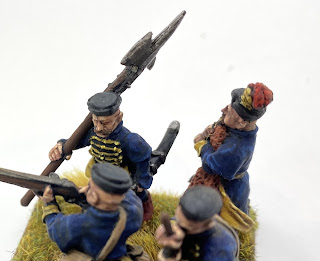
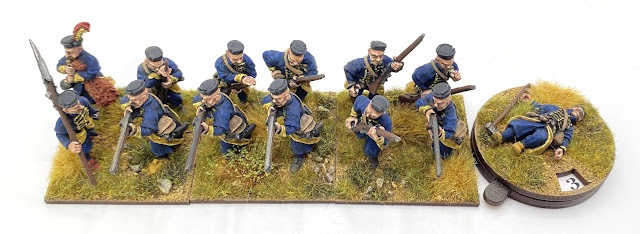
A ‘tenth man’ and musician.

Biting open a cartridge.


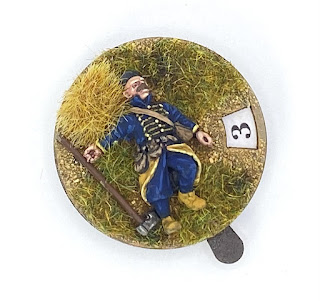
Casualty Marker from Warbases

I painted the figures using the same approach as described in the previous post above. I think they’ve come out alright. I’ve added a casualty marker for the unit as well, using one of the handy counter bases from Warbases. 


The scroll shows further Haiduk uniforms and so I will be trying these in the future. Next up, my Haiduks need some commanders.

Until next time

Andy @ The Friends of General Haig.