Showing posts with label cavalry. Show all posts

Friday, 16 February 2024

“Mighty fair description of men without horses …”

(A quote from MacIntosh, played by Burt Lancaster, in ‘Ulzana’s Raid’. The quote has no relevance other than describing mounted warriors being on foot!)

28mm figures from Bloody Miniatures

This post looks at the latest unit coming from my painting table; a unit of dismounted Polish Rajtar (Reiter) for the Khotyn 1621 campaign.

Inspiration 

The inspiration for this unit was two-fold. Firstly I was looking for a reason to paint another batch of the stunning Bloody Miniatures that have been accumulating in the pile-of-opportunity.  They really are a joy to paint.  Secondly I was inspired by reading about the actions at Khotyn in September 1621.  As the month went on the assaults and sallys that took place became more and more desperate.  Much of the fighting involved the storming and counter-storming of the Polish defensive earthworks. Every available soldier was required in these actions and this led to both sides dismounting their horsemen to add to the fighting strength.

The command party with officer, cornet and trumpeter.


Horsemen, but on foot

The dismounting of cavalry to storm, or defend, fortifications in this period  was fairly common. Their armour, firearms, and more elite status no doubt added to their effectiveness in the role. I have used a mixture of Bloody Miniature figures to form this unit, including figures in three-quarters (or cuirassier) armour, back and breast plates with buff coats, or just buff coats.  To add to the dismounted horseman feel I also chose figures in the long bucket-top boots, a definite period indicator of a rider. (If dismounted troops had the choice then this form of footwear would not have the been the best choice for clambering over earthworks, or to aid agility, but let’s say they had not brought spare shoes with them!) 

Some handy options for fighting in fortifications: armour, extra powder and grenades!


Building the unit

The Rajtar units in the Polish-Lithuanian Commonwealth armies were typically recruited from Germany.  They probably wore a mixture of armour, based on what they could afford and personal choice.  I also avoided three barred ‘English Pot’ helmets to keep the continental feel.  The only light conversions needed were to make a trumpeter and a cornet to carry the troop’s colour. These were fairly straightforward.  The trumpet came from a Warlord plastic cavalry sprue. (I’m not sure that dismounted troopers would have bothered with a trumpet and their cornet/colour in this more brutal and disorganised fighting ‘in the breech’. However, it was fun to show these types dismounted as well.)
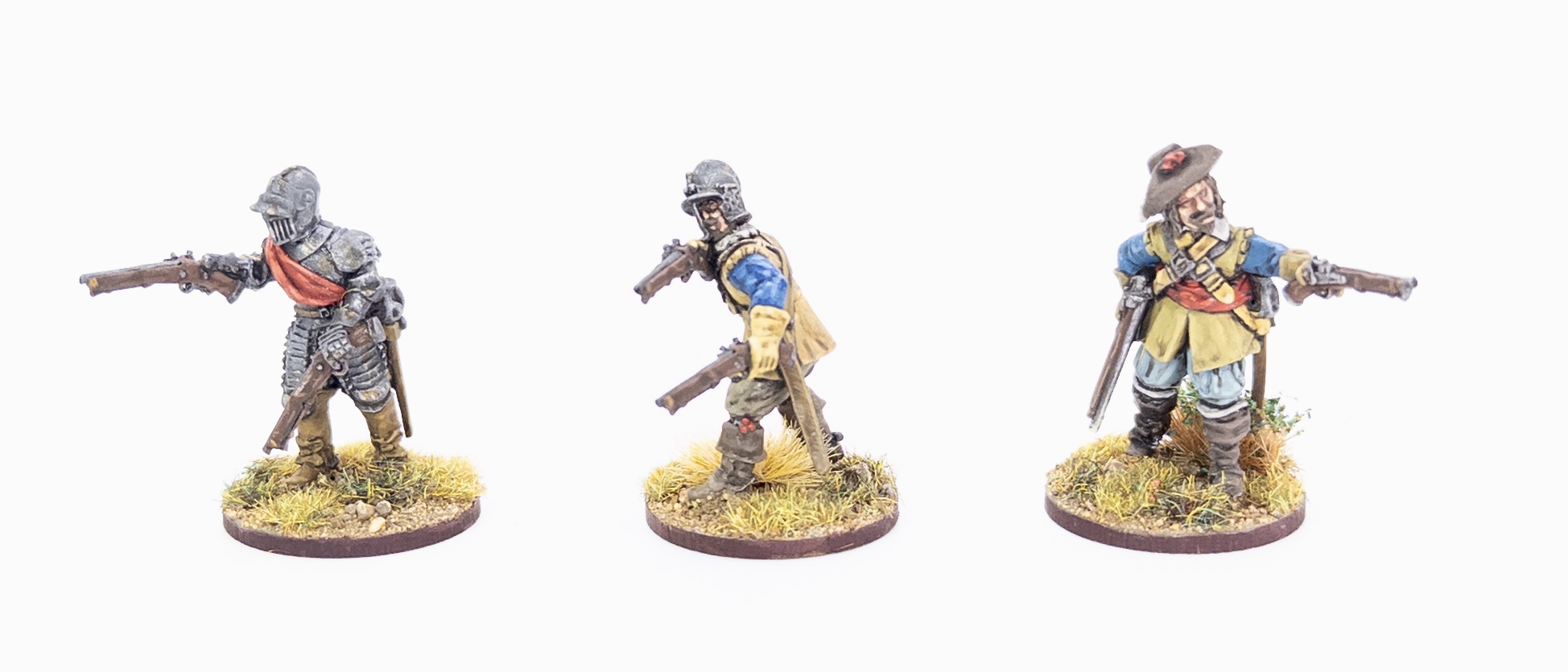
Making the most of cavalry short range firepower


Painting

I painted the troopers in fairly neutral colours, with a vague blue theme based on nothing more than personal choice.  I have shown the buff coat wearers in sleeveless buff-coats, for this earlier 17th century period, by painting coloured coat sleeves.  Scarves (sashes) and other clothing accents were painted red / scarlet to help tie in with an Imperial theme, in case I want to use the unit in my Wallenstein Imperial army for Thirty Years War battles. Red is also nice colour accent against the dark, greyish armour and blue, grey clothing. The cornet/colour is from the Flags of War Imperial Thirty Years War range, with some battle damage added.

With carbine, swords and pistols.


Basing

The figures are based individually on 2 pence piece size bases and I have made up some sabot bases as well (all from Warbases).  This gives a suitably pell-mell feel to a unit that will be required to carry out some desperate actions in difficult circumstances, as well as in difficult terrain. I included a casualty marker on a Warbases 40mm counter base. The casualty is from the Bicorne ECW range. His discarded pistol is from the Bloody Minis spare equipment packs, and his lost hat is from the ‘spare bits’ box. 

Casualty from Bicorne Miniatures, on a Warbases counter base.

Khotyn 1621 Project Update

In other Khotyn 1621 project news, I have been researching the Ottoman army and buying a few figures to investigate options and possibilities. Thank you to everybody who has made recommendations.  So far I have selections of figures from Warlord Games, Warfare Miniatures, The Assault Group (TAG), Perry Miniatures, and Fireforge Games, as well as some 3D prints from various designers all printed by the super-helpful Paul at Sabotag3D Wargames Accessories.
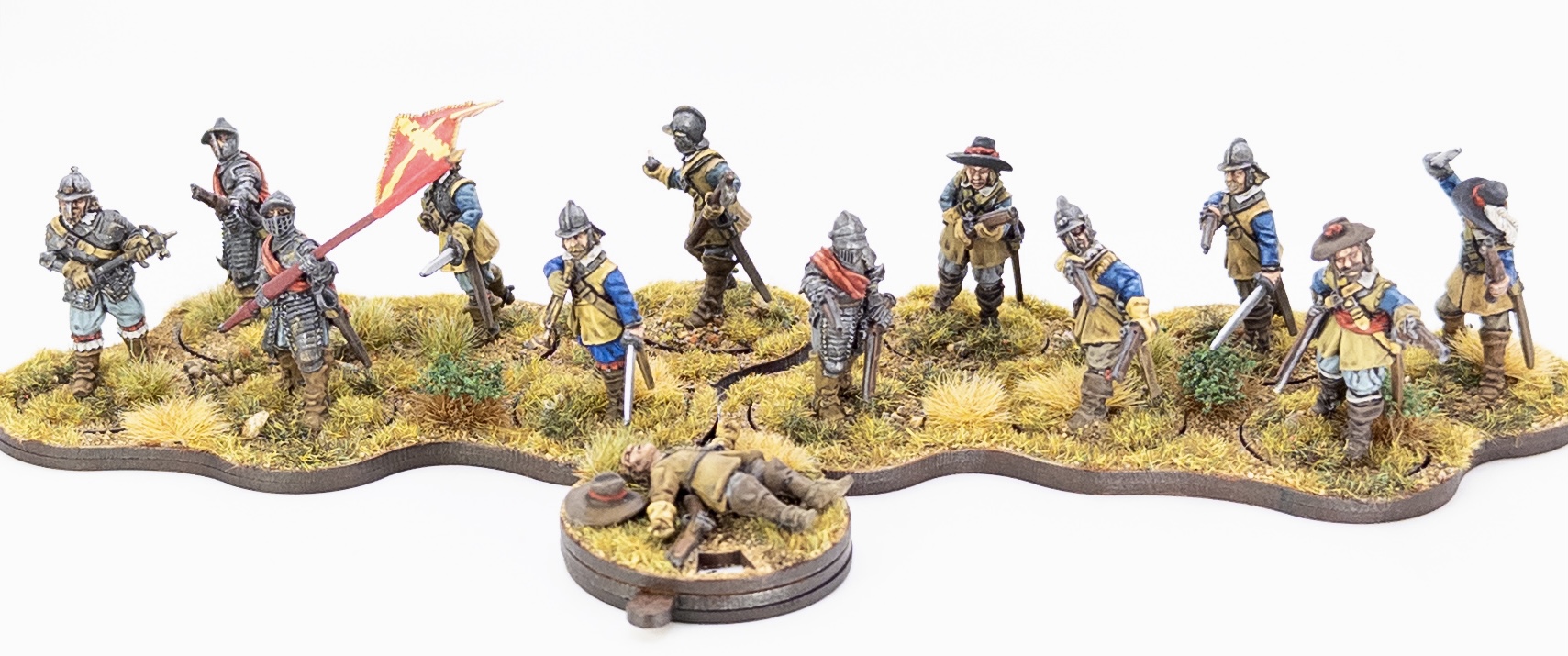
The whole outfit - in their sabot bases (also from Warbases).

Book Competition Winner

Regular readers will remember that in the previous post (here) I offered a copy of Michal Paradowski’s Khotyn 1621 book from Helion as a prize to a commenter on the post (on any of the social media channels in which it appeared).  The commenters were added to a spreadsheet and a winner was chosen at random.  Many congratulations to Danny Buck who commented on Twitter.  You can see Danny enjoying his book below, and you can follow him on Twitter / X here: @DannyBuckUEA  

Many thanks to Michal for providing the book as a prize, and also many thanks to all of the commenters who took part across X, Facebook, TMP, LAF and here on Blogger.

Dr. Danny Buck with his prize! 

The next unit on the painting table should be Ottoman, and I look forward to discussing my initial choices in figures and paint schemes in the next post.


Until next time,
Andy @ The Friends of General Haig. 


Thursday, 24 November 2022

“Finland , Finland, Finland, the country where I quite want to be…”

 This post looks at the latest unit for my Swedish 1620s/30s army; a unit of Finnish horse, the famed ‘Hackapells’. 

Finnish Horse (the ‘Hackapells’) - 28mm cavalry from 1st Corps Miniatures 

In this period Finland was part of the Swedish Kingdom and so the various Finnish regions provided units of horse to the national army, just as they did in Sweden itself. Although not recruited and equipped differently by design to any other of the Swedish horse, the Finns gained a reputation at the time for: ferocity, scouting, and having an air of Eastern exoticism. 

Their period nickname of ‘Hackapells’ (or perhaps ‘Hakkapeliitat’ in Finnish) referred to their battle cry of “hakkaa päälle!” or “cut them down!” that, no doubt, led to their ferocious reputation.  They often seem to have been used to clear away enemy light horse, such as the Croats, when fighting in Germany, and also to have been used in the role as scouts being Gustav Adolph’s “best Cavallerie for Discoverie”.

As with all of the Swedish horse, it is difficult to be precise about exactly how a particular unit was equipped. We know that in general Swedish horse were often short of armour, and that the Finnish units were from poorer areas of the Kingdom, so I thought a unit equipped only in ‘riding coats’ would work for the Fins. I have seen some suggestion that they wore morion type helmets but I preferred the classic look of the broad brimmed hat, also used in the picture in the Osprey ‘The Army of Gustavus Adolphus (2) - Cavalry’ by Richard Brzezinski.

To represent the Finnish cavalry I have used a set of figures from 1st Corps Miniatures.  (https://1stcorps.co.uk/product-category/horse-musket/english-civil-war/)  1st Corps are a long established UK manufacturer of metal figures in 28mm covering an extensive range of periods, including ECW and TYW ranges.  At a recent-ish demo game I was asked if I’d used any 1st Corps figures and I had to admit that I had not, although I’m not sure why (hi to James from Shakos and Sprues!).  I thought this was a good prompt and so when looking for cavalry figures I decided to have a good look through the 1st Corps ranges.  

1st Corps do figures in packs of three but also have ‘unit’ deals for units of 12 figures, which is perfect for my cavalry units. In their ECW range they had a nice set of cavalry with no armour, with soft hats, on galloping horses, and with their sword arms very much suggesting they are keen to cut down the enemy. These seemed perfect for Finnish horse.

The 1st Corps figures are classic metal 28mm figures and needed the typical amount of clean up for figures of this type. The troopers and officer have separate sword hands which have a neat way of attaching to the figures’ arms, and allow a nice amount of variety in how the resulting figures look.  The figures have nice ‘chunky’ details that were easy to paint.  I did do a couple of minor conversions.  I added a ‘Swedish cavalry’ head from Warlord to the officer, and changed the Trumpeter’s montero hat for a broad brimmed hat.   The striking orange coats were again inspired by the Osprey book. 

I couldn’t find flags, known for certain, for the Finnish horse in this period, and so I used a Swedish cavalry cornet from ‘Mikhail Betskii Creation’ that I liked the look of.  1st Corps also do casualties (horses and unhorsed riders) so I was happy to add another ‘wound marker’ base to the collection.  The MDF base is from Charlie Foxtrot.

Next on the painting table I’m looking to try my hand at some resin buildings, which is an interesting change from figures, and the remainder of the Yellow Regiment are also looking at me impatiently from the lead mountain of opportunity! 

Until next time, 

Andy @ The Friends of General Haig (FoGH)


Monday, 15 August 2022

More Swedish Cavalry

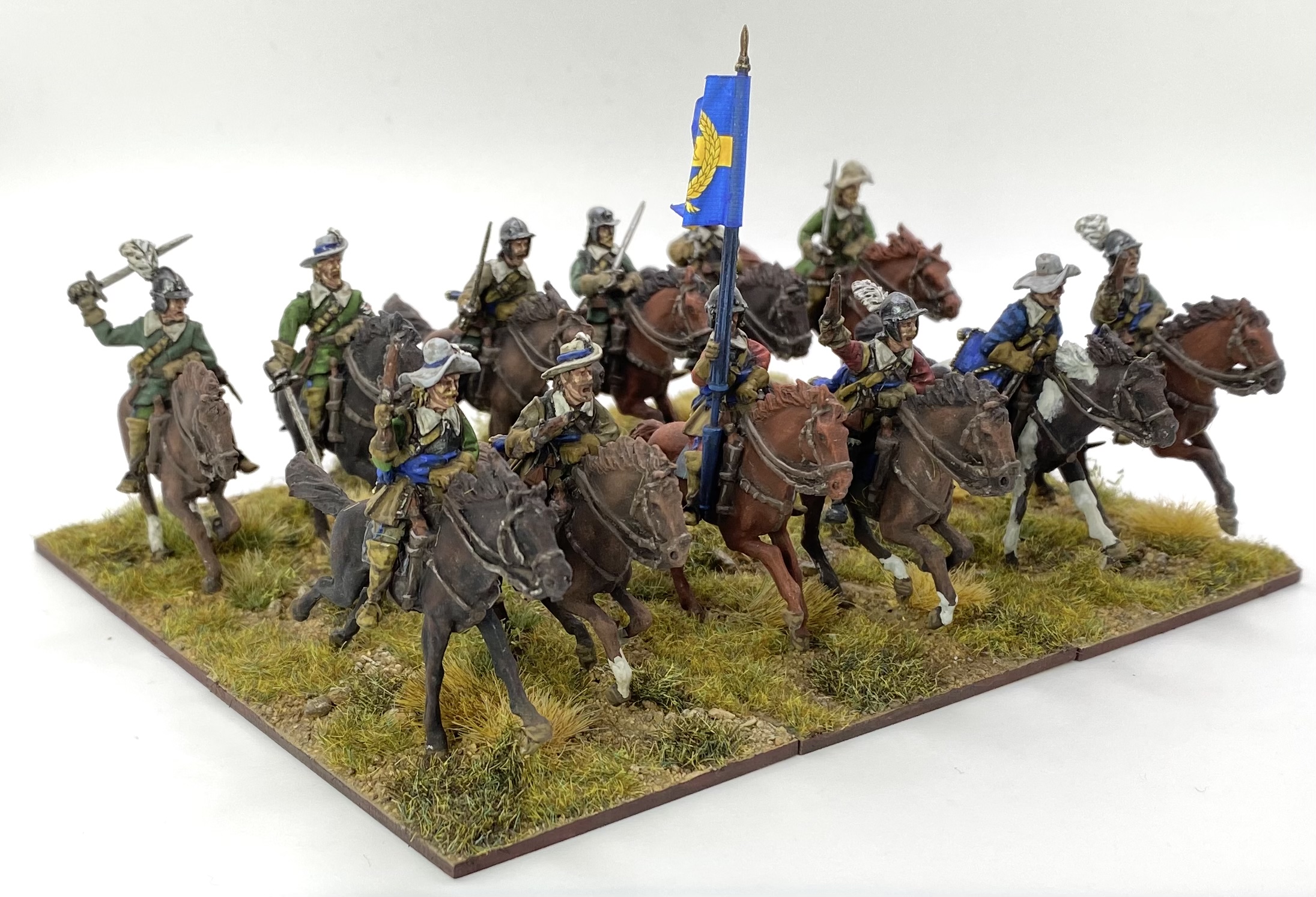
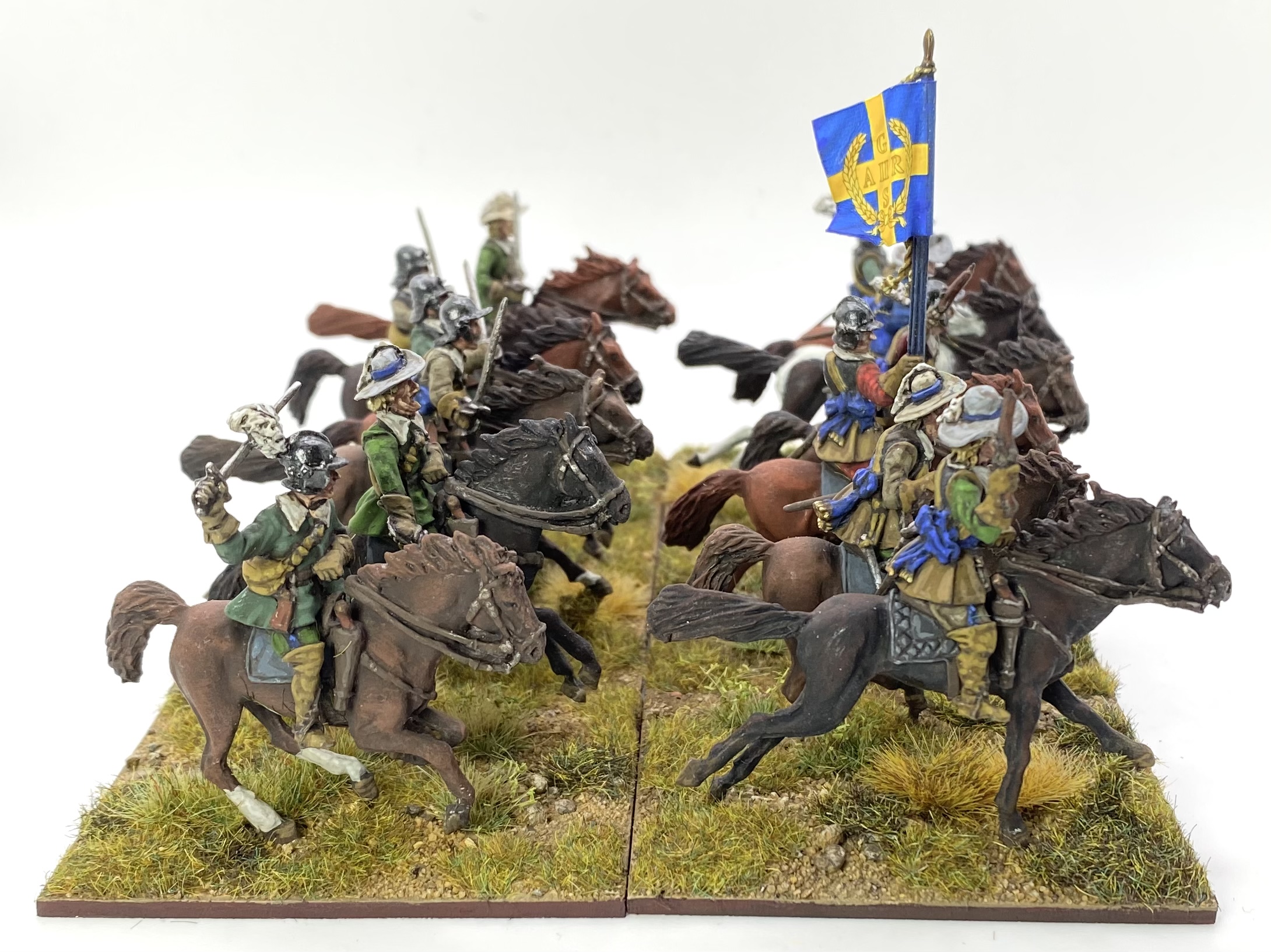
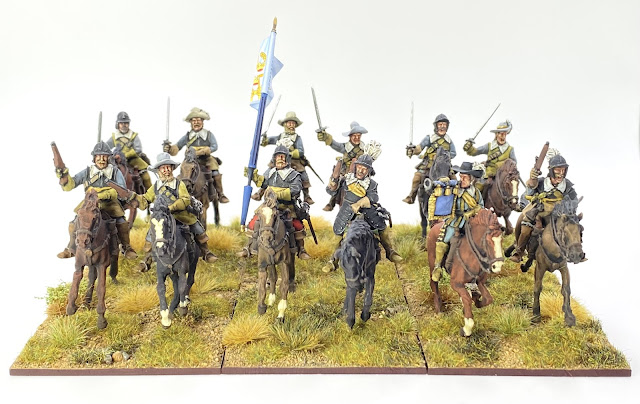
In this blog post I look at the latest unit from my painting table. A unit of 28mm Swedish horse, for my 1620s/30s Gustav Adolph army, using 1898 Miniatures’ Thirty Years War (TYW) range.

28mm cavalry from 1898 Miniatures’ ThirtyYears War range.

I completed my first unit using these figures back in February (see link) and covered the 1898 recent figure release then. This new unit was approached in a similar way. 1898 released nine packs of cavalry, each of three figures.  I bought one of each pack, and so this new unit was built using the remaining figures (with three left over that will be used to accompany the 1898 TYW general figures that are in the ‘pile of opportunity’). 

As with the previous unit I have kept with the front rank holding pistols and the second rank with drawn swords, following Gustav Adolph’s instructions for how the Swedish horse was meant to attack.  The first rank was to only fire at point blank range, and the following ranks to fall on directly with cold steel.

I had used the one command pack on the previous unit and so for this unit I needed some slight conversions. I used the cavalry cornet pole arm and trumpeter’s arm from the Warlord plastic cavalry box which fitted the 1898 figures with a minimal amount of filing and green stuff.  

The cornet is again from Mikhail Betski, at MB Creation, and I have also again used the colour of the flag to influence the scarf/sash colour, this time having them a royal blue colour, fringed with yellow.  At this period, my understanding is that, there was no standard sash colour used by the Swedes and I tend to switch between blue, green and yellow as fancy takes me, these colours at least contrasting with the Imperials’ red sashes.

I gave the unit a green theme, painting their riding jackets in different shades of green, with a few sleeveless buff coats in the front rank with the better equipped men.  I also gave the trumpeter a pie-bald horse, after reading that this was popular with the Swedes in this period, when appropriate horses were available. 

These were a bit of a slog to get through and I’m blaming that on the summer weather!  Next up on the painting table is the start of a unit that I have been looking forward to painting for a long time.

Until next time!

Andy @ The Friends of General Haig 

Sunday, 29 May 2022

More Polish-Lithuanian cossack cavalry

 This post sees a new unit of cossack cavalry joining my Polish-Lithuanian Commonwealth army. 

28mm figures from TAG, Foundry and Warlord.

“Gustavus then prizes one cossack banner that having had been assaulted and circled completely by the 4 Swedish cornets, yet despite having been in a tight corner, with such a valour in their midst was explaining itself with cold steel …” A comment on the Swedish King’s view following the Battle of Honingfelde/Trzciano 1629.

[UPDATE - Michal from the Kadrinazi blog makes an important note on this quote in the Comments section, so please check that out.] 

These 28mm figures are from a mixture of manufacturers.  The riders are from TAG, Warlord and Foundry, with the horses all coming from TAG.  The figures have had some minor conversions, to add carbines, and other equipment, mostly from TAG with some bits from the Warlord plastic cavalry set. 

In a previous post (here), where I covered the previous unit of cossacks that I completed, I gave a description of this type of cavalry, along with the figures, conversions and the nail art stickers used in constructing them.  

[UPDATE - Some of the links in the previous post no longer work.  The original place that I saw the nail sticker art used on figures is also here: https://www.anotherminiaturespainter.com/wargames/28mm-the-assault-group-polish-pancerni-cavalry/ .  I think Jose is an awesome painter and his wonderful Polish collection has been a real inspiration for me.]

I have now used these cossack cavalry in a few games.  Here are the factors that I have been using for games using Warlord’s ‘Pike & Shotte’ rules.

For those not familiar with ‘Pike & Shotte’ these factors translate as follows (all comparisons are with the typical ‘harquebusier’ cavalry of the period, that makes up the majority of Swedish cavalry in the tabletop battles I have fought):

  • As Light Cavalry they move slightly faster.  They are also able go in to a ‘skirmish’ or open order formation that makes them a more difficult target for shooting, and allows them to evade from formed troops.
  • They are slightly less hard hitting, and slightly more vulnerable, in melee. (I may look to vary this in future and have some units more comparable with the Swedish harquebusiers.)
  • The ‘Marauder’ special rules means there is a no negative modifier for the distance from the general when orders are issued.  This allows them to operate in a more dispersed manner, that seems appropriate for these light troops.   

This combination of factors has seen the cossacks being most successful when either supporting the heavier Hussars, or operating on the flanks of the enemy formations.  They have been less successful when expected to take on frontally the Swedish cavalry. 

I’d be interested to hear about how other think the cossack cavalry should perform on the tabletop. 


In the next post I will be looking at some temporary defences supposedly used by the Swedish troops in the 1626-9 campaign against the Poles. 

Until next time!

Andy @ The Friends of General Haig.


Postscript. I wanted to share a snippet of information that is related to the Blogger platform, the service I use to deliver this blog, rather than related to hobbying.  Blogger does not get much love from its current owner (Google) and it can feel a bit limited in use.  It is even worse if you try and use Blogger with only a mobile iOS device. These limitations had grown much worse for me recently as I couldn’t make the Comments function work, either for my blog, or in other people’s blogs.  I found a fix today, almost by accident.  So here is my quick tip that works for me as of 29th May 2022.

First of all I use the Chrome ‘app’ / browser on my iOS devices to access Blogger.  In the past this has solved a lot of problems with Blogger; Google’s own browser working better with Google’s blogging platform.  The new tip is a cookie setting.  You need to go to iOS Settings and then look within the settings for Chrome.


From the screen snip above you can see that you need to switch on “Allow Cross-Website Tracking” which is in effect enabling third party cookies. This seems to fix the issue that I had been having with Comments in Blogger blogs, including my own.

I hope this helps someone else.  If anyone has any thoughts on this fix, or knows any other tips for using Blogger on a mobile device, then I’d love to hear them.

I have started looking in to Wordpress as an alternative for blogging but this fix has at least delayed my imminent switch! 


Sunday, 27 February 2022

Thirty Years War cavalry from 1898 Miniatures

In this blog post I look at the latest Thirty Years War (TYW) release from 1898 Miniatures; the Cavalry.  

Thirty Years Wars Cavalry from 1898 Miniatures - 28mm

The post is broadly split in to three parts: a description of the figures, how I found preparing and painting them, and finally the first unit that I have built using the figures. 

The Figures. 

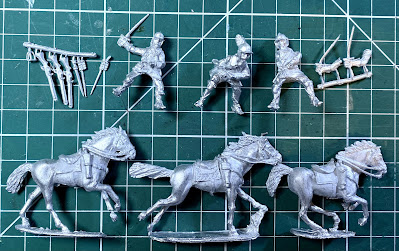
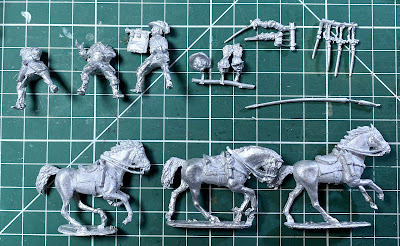
1898 released these cavalry at the end of 2021, adding to their existing range of infantry and generals for the period. There are nine packs in this release that include armoured and un-armoured riders, wearing helmets or broad brimmed, soft hats, holding pistols or swords, as well as a command pack. Each pack contains three different rider figures which means that you have a lot of variety available. There are three different horse sculpts across the rank and file packs, and the horses in the packs with pistol armed riders have one pistol missing from the saddle holsters which is a really nice touch. 

Contents of a typical cavalry pack

The command pack contains an officer, a trumpeter and a cornet / standard bearer. There are head options for the officer and cornet, and arm options for the officer as well.

Contents of the command pack

Each pack includes separate scabbards and carbines to be glued on to the figures. For figures holding their sword the scabbards are empty, and for figures holding a pistol the scabbards have the sword sheathed. Another nice touch.

The riders fit on to the horses very easily with the saddle sculpted on to the horse rather than the rider. The horses themselves are well proportioned with the bridle and other tack nicely detailed on the models. The horses are in active poses either cantering or galloping. In addition to the riders’ animation, this will give a great impression of attacking cavalry.

The resulting figures represent the classic early to mid 17th century harquebusier type cavalry. The rider’s armour is mainly limited to back and breast plates, with the occasional figure having some arm protection as well. Helmets are either of the burgonet or single-barred Dutch pot variety although the helmeted packs include a tiny three-barred face plate that you could add to one of the figures to turn the helmet into a three-barred English pot.

They are modelled wearing a buff-coat although this could sleeved or sleeveless depending on how you paint them.  You could of course paint them as wearing riding coats and not buff coats if you choose. Many, but not all, have a scarf/sash, so necessary in a period when cavalrymen of this type looked very similar in all armies.

Figures wear leather gauntlets and have their swords suspended either from a cross belt or waist belt.  All of the figures have a cross belt on their right to which you attach the carbines. The figures have powder flasks hanging from this cross belt as well.

The figures retain the sculpting style of the infantry. Nicely sculpted, with lots of detail, and every figure has bags of character. I think they really look the part of figures for this period, and with the variety of different rider figures available, you can make a very varied looking mounted force.

Building and Painting

The figures come with minimal chipping and filing required. There are some tiny burrs from the casting process, and minor mould lines to be filed.  The metal is the softer style of white metal rather than the stiffer more brittle style of some manufacturers.  Some of the horses have only two contact points with the base and so are at risk of bending at the ankles if roughly handled. I haven’t had any accidents with horses actually breaking off the base, which I think is thanks to the more forgiving, bendy metal.  Where riders’ right arms were not positioned quite to my liking I was able to gently bend the arms in to slightly different poses. 

With at the very least a separate scabbard required to be added to every figure, there is some assembly required.  The scabbards can be a little fiddly and so super glue with a spay can activator is definitely your friend at this point. Some figures have a separate right arm that helps add further variety to units and these glue on quite easily.

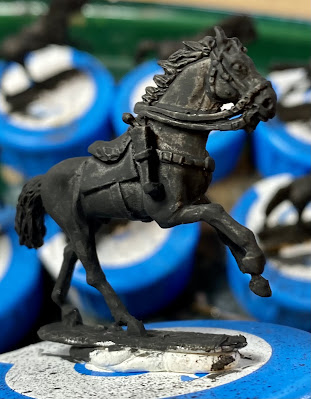
Primed horse figure

Once primed the figures are a joy to paint.  The detail is perhaps not as prominent as say a Bircorne or Bloody Miniature figure, but I didn’t have any trouble using my normal methods including washing and dry brushing.

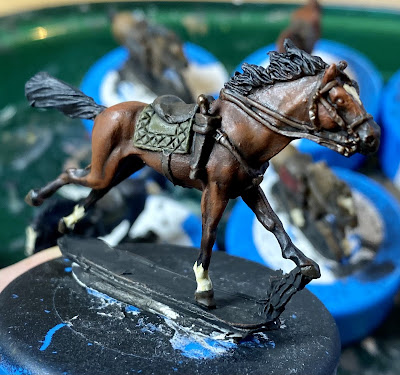
Horse following base coat, dry brush highlights, tack etc. painted, overall wash, and blaze/socks added.

My First Unit

With the style of the figures being quite animated and, to me aggressive looking, I thought they would  work really well as Gustav Adolph’s Swedish Cavalry.  From the late 1620s the Swedish cavalry were adopting a doctrine of being more aggressive and saving firepower to use in close quarter fighting.  Gustav Adolph issued orders that the first rank of cavalry should attack with pistols, that were to be fired just before impact, and the second and subsequent ranks were to attack with swords drawn.  

With the variety of pistol and sword armed figures available, I decided to have a front rank with pistols and a rear rank with swords. Swedish cavalry were often short of armour and so I had the front rank all armoured, and the rear rank mostly unarmoured.  

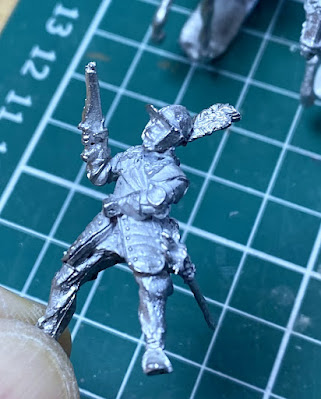
Officer with right arm, head and scabbarded sword glued in place.

As part of reducing his horseman’s reliance on firepower, Gustav Adolph also took carbines away from his cavalry units. This would mean I didn’t get to use the nice separate carbines provided for the figures, and also means that the right hand cross belts on the figures are unnecessary. However I can live with this slight oddity that I suspect the majority of people will never notice! 

Cornet / standard bearer with Warlord plastic ‘lance’.

The cornet / standard bearer is provided with a white metal ‘fluted lance’ to carry a flag. I can never get on with white metal pole arms as I find them difficult to keep straight.  I therefore replaced this with a Warlord plastic fluted lance.  (There is one on every Warlord cavalry plastic sprue and so I have lots of spares!)

I painted the horsemen mostly in sleeveless buff coats and gave them varieties of  grey for coats and breeches. Sashes / scarves were painted yellow.  There doesn’t seem to be a clear sash colour for the Swedes at this time and so the choice was as much aesthetic as historical. Armour was painted black, and broad brimmed hats were mainly lighter greys that seem to have been favoured by the Swedes. 

The unit was finished with a cornet / flag from Mikhail Betski at MB Creation, a supplier I’ve only recently come across, who provides some really nice flags for this period. I used the colour of the flag to influence the colours for the trumpeter’s clothing as unit’s musicians were often expensively dressed by the unit’s officer as part of the military fashion of the time.  

In conclusion, I think the new 1898 TYW cavalry figures are a great addition to their range, and a great resource for all those collecting 28mm armies in this period. All of the 1898 figures have a particular style, but will still work well with other manufacturers. I’m really pleased with the unit I’ve built with them and I will be adding a few more in due course. 

The next figures on the table will be some Polish civilians and another general stand for the Poles. 

Until next time!

Andy @ The Friends of General Haig 

Sunday, 20 June 2021

Åke Tott’s Cuirassiers

After several months focusing on my new 1620s Polish army, this blog post shows a new unit of the Pole’s adversaries in my Swedish army; Åke Tott’s cuirassiers.

28mm Cuirassiers from Avanpost Miniatures

I was inspired to create this unit after seeing the new cuirassier figures from Avanpost Miniatures (available from Mezzer’s Minis in the UK link).  I’ve written before about the superb detail on the Avanpost figures and these cuirassiers are no exception.

History

Cuirassiers were the supreme shock troops in many armies in this period. Encased in three-quarter armour, riding large horses, and armed with swords and pistols, they were fearsome opponents on the battlefield. As the Swedish king, Gustav Adolph, built up his army in the 1620s he decided he needed more of these heavy cavalry in his forces, particularly when he had to face the dreaded Polish Hussars.  By the battle of Dirschau in 1627 there were several companies of  cuirassiers in the Swedish army, although how complete their armour was is not clear.  It is not uncommon in this period for a unit of cavalry to be raised as cuirassiers, but for them to be missing parts of the armour expected for cuirassiers. This may be because the armour wasn’t available, or because the troops ‘lost’ those elements that were uncomfortable to wear over a campaign.

I’ve chosen to represent this unit with a fair proportion of figures in the classic cuirassier three-quarter armour, but one or two figures, relegated the the rear rank, are less armoured perhaps representing newer recruits.

Avanpost Miniatures


The Avanpost figures are bought individually and each comes in a small zip lock bag. Most require some assembly; typically arms and scabbards. You can see in the picture the typical contents for a bag. 

I would recommend giving the resin figures a wash in warm soapy water to get rid any residue from the production process. I used a large, child’s paint brush to make sure I could get in to all of the nooks and crannies as well as being gentle with with the thin resin pieces. You need to be gentle with the swords and scabbards in particular. 


Once washed, and dried on paper towels, the figures are very easy to assemble using small amounts of super-glue.  There are not many options for varying pose without resorting to scalpel and putty, but as there is a good selection of different figures available, this isn’t a problem.  Here are a few of the figures made up.


Avanpost don’t currently offer a trumpeter figure so I added an arm from the Warlord plastic Pike and Shotte cavalry sprue that is holding a trumpet, with a smidge of green stuff to match the figure.

As the weather was wet I couldn’t spray prime the figures outside, as I normally would, and so I primed the figures by brush.  I typically use Humbrol Enamel paint for brush priming as it gives a really good base to paint on top of.  In an attempt to have an easier to use product (i.e. you don’t need to clean the brushes in white spirit!) I have been using this product from AK Interactive and it works really well - very matt and good adhesion to the figure; metal, plastic and metal. 

Åke Tott

After painting a few brightly coloured units I decided to paint this unit as a complete contrast.  Swedish (and German) troops’ armour was typically blackened in this period, to protect the metal.  I therefore kept everything else on the figure also in very dark tones.  I think this gives the unit an ominous look.  For a cavalry standard I chose to use one that is attributed to Ake Tott’s regiment.  

As his name could be interpreted as ‘death’ in German, Ake Tott played on this theme with his regiment’s standards, using a black field and a skull motif.  Who doesn’t want a flag with flames bursting from a skull’s eye sockets?!  The flag is from Flags of War.

Åke Henriksson Tott (1598–1640)

Here is the completed unit: 


Conclusion

These Avanpost figures were an absolute joy to paint; such crisp detail and beautifully sculpted figures. I’m not sure that I would mix the horse figures with other manufacturers in the same unit, but I have used the riders in the same unit with Warlord, Perry and TAG.  I enjoyed this unit so much that I have ordered another unit’s worth from Mezzer’s Minis.  

Base with the figure I converted to a trumpeter.

Love the action pose of these figure that look like they are about to pistol some poor infantry.

I included the Avanpost Mounted Commander figure in the rear rank - lovely figure!

I plan to make some more conversions on this second unit, but I think the Swedes will soon have another cuirassier unit!

Until next time!


Andy @ The Friends of General Haig (FoGH)