Showing posts with label Haiduk. Show all posts

Monday, 25 July 2022

Haiduks and Housing

This blog post is just a quick update on my 1620s Polish-Lithuanian Commonwealth army in 28mm.

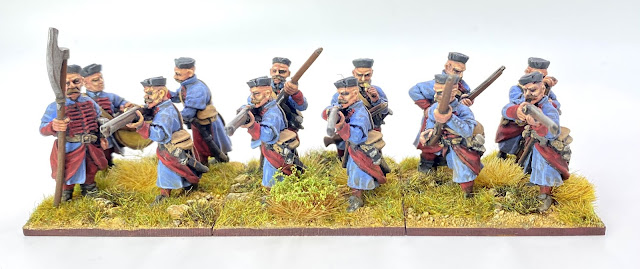
28mm Polish Haiduks from The Assualt Group (TAG) and Foundry.

Slow progress over the last few weeks, but I have completed another unit of Haiduks, and I’ve also built a MDF cottage (from 4Ground) for use in my Polish v. Swedes games set in Prussia.
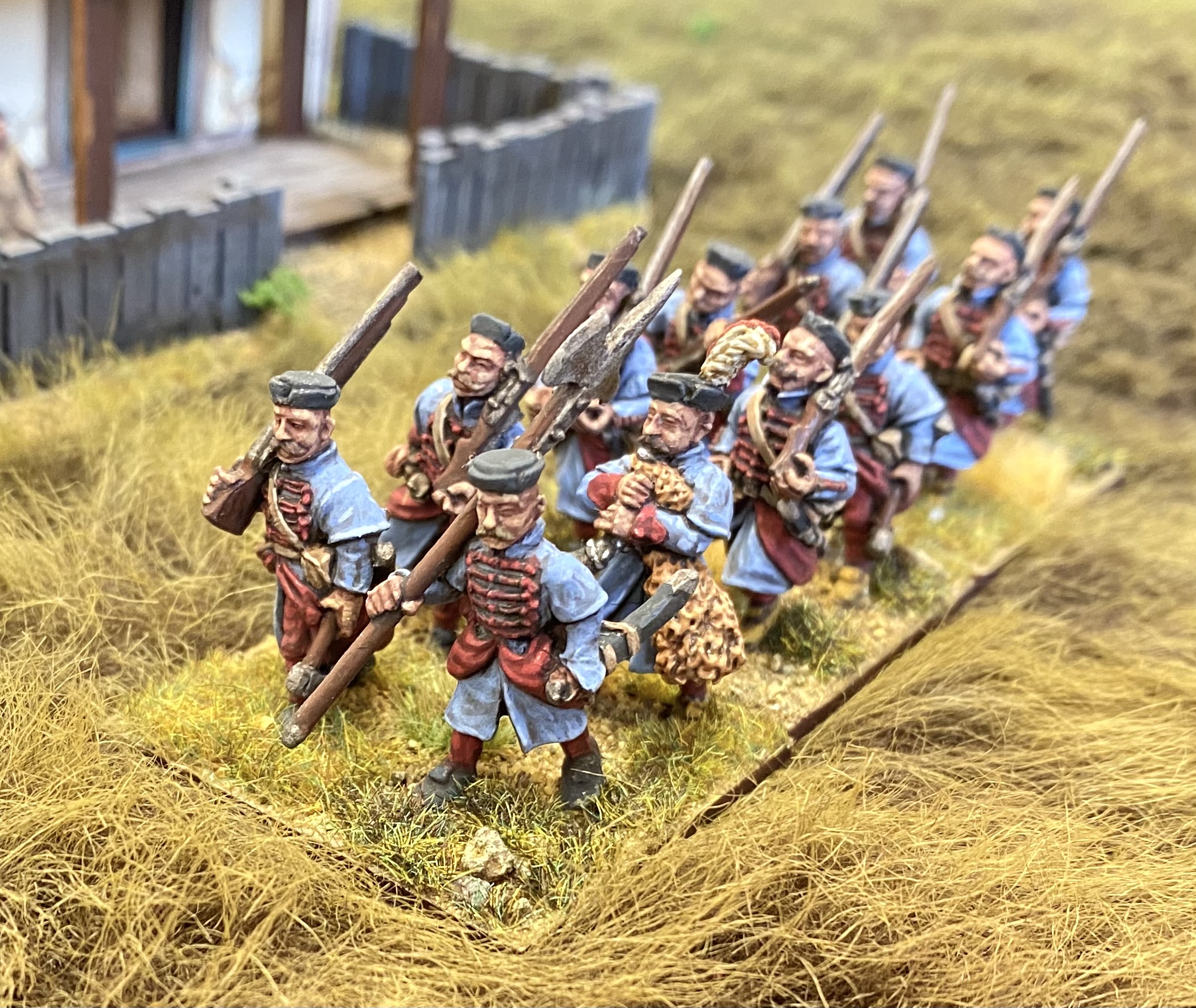
Marching through the Prussian countryside.

This is my third unit of Haiduks, and I have returned to the ‘classic blue plus red lining’ colour scheme for this unit.  (You can see some more details on Polish Haiduks in my first post on them here:  https://theviaregia.blogspot.com/2021/11/polish-haiduks.html .). The figures remain a mixture of The Assault Group (TAG) and Foundry.  This units uses marching poses from both manufacturers. 

When I was thinking of taking a few pictures of this latest unit of Haiduks I thought that it would be nice to have a rural looking house.  I have had this 4Ground MDF building in my stash for some time, and while intended for WW2 Eastern Front games, I thought it would also suit me for the 17th century. 

Eastern Front MDF building from 4Ground.  Built, primed, ready for finishing and some flock etc.

It is a very detailed kit as you’d expect from (the now sadly defunct) 4Ground, and was easy to build despite the detail.  One of the things that drew me to this model was the teddy-bear fur thatched roof, with the fur provided.  Once the material was stuck on to the roof, I brushed in a lot of PVA to the fur, and then painted it.  This was pretty straightforward and drying times much improved by the UK’s recent heatwave. 

Finished building populated with my Polish civilians.

I have left the cottage pretty much as it comes out of the box for the remainder of the kit, just splashing about some weathering. I built a base for the building using a Warbases 3mm scenery base, and the fencing was also supplied by 4Ground (from Things From The Basement).

Next up on the painting tray are more Swedish cavalry.

Until next time!

Andy @ The Friends of General Haig (FoGH).

Wednesday, 23 February 2022

Haiduk Command

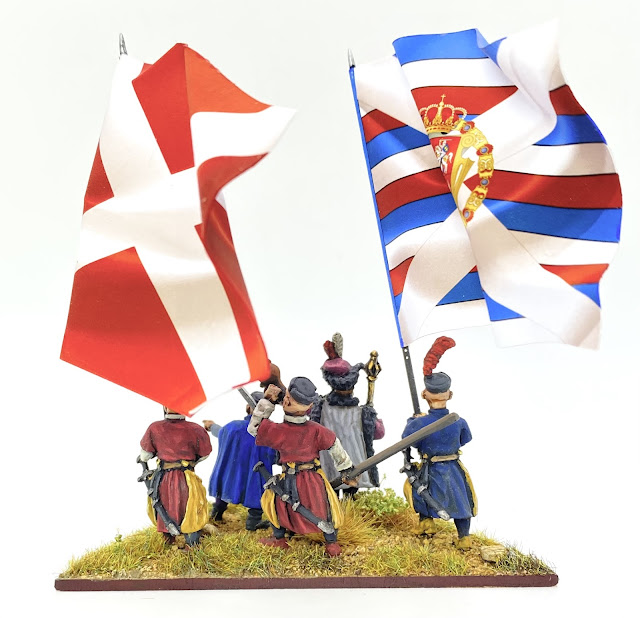
 In this latest blog post I tackle some command bases for my Polish early 17th century Haiduks.

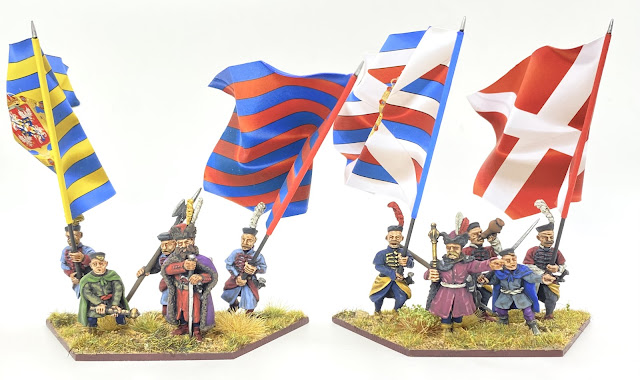
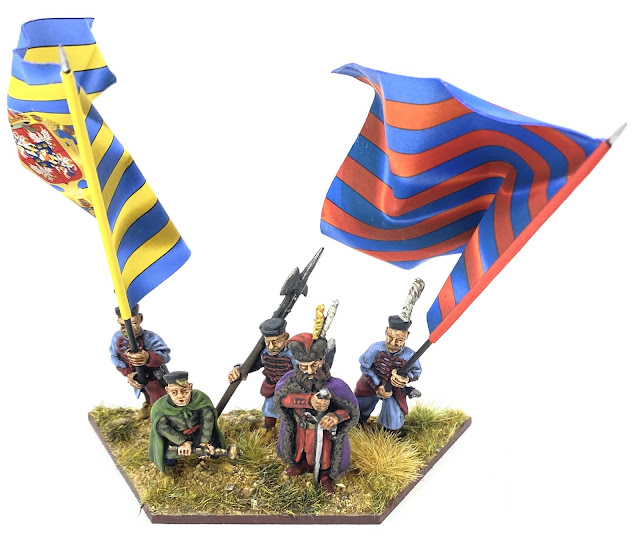
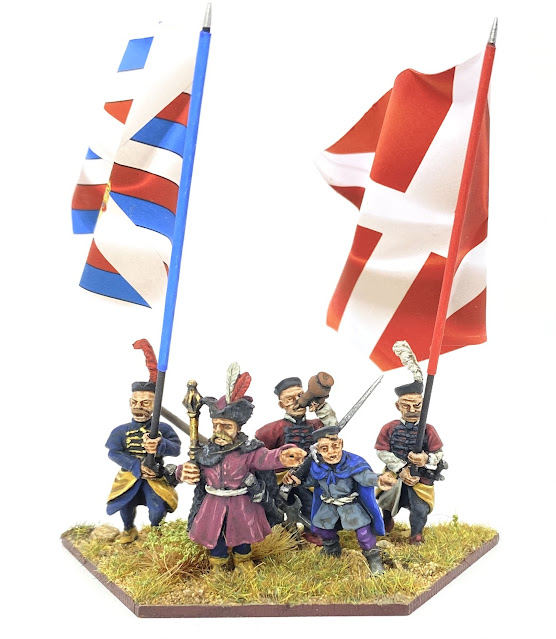
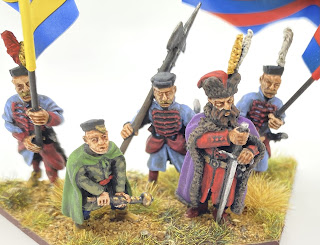
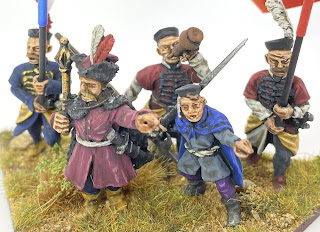
Haiduk Command Bases with Foundry and TAG 28mm figures

Units of Haiduks, known as ‘Banners’ were led by a Rotmistrz and included ensigns, musicians and NCOs known as tenth men. I thought that representing these on a base would add some colour to my Polish infantry. 

Both Foundry and The Assault Group (TAG) have Haiduk command figures and I’ve mixed these two manufacturers to form two bases. 

The Rotmistrz was allowed a servant ‘boy’ on the Banner payroll as an assistant, and servants are frequently shown carrying weapons for officers. Both Foundry and TAG have a boy carrying weapons in their command packs, following the illustration in the Osprey Men-at-Arms on the Poles. The Rotmistrz and his boy were dressed and equipped at the Rotmistrz’s whim and expensive. As a noble we can expect rich clothing, featuring furs for the Rotmistrz himself.  The ceremonial mace or Bulwa was a symbol of rank, and a large two handed sword seems to have also been a popular weapon. In one of my command groups the Rotmistrz has the sword and his boy is carrying the his Bulwa. This is reversed in the other group. 

As discussed in my blog post on the rank and file Haiduks they were, unusually for the time, uniformed. The ensigns and tenth-men may have had a fancier version of the uniform but I’ve decided to keep with the same colours as the rank and file. 

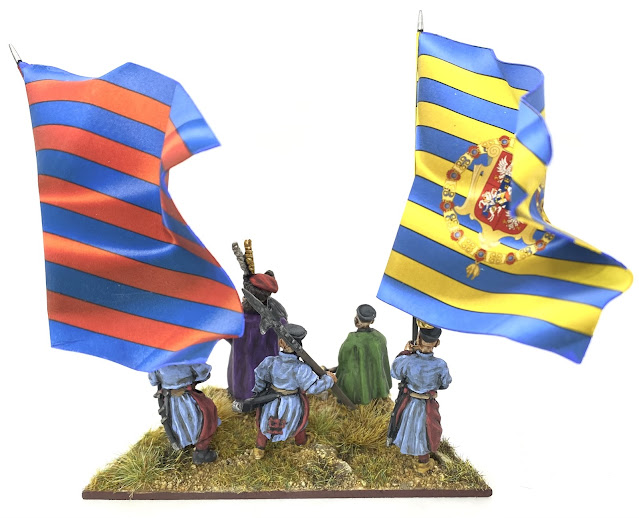
For the flags I have used those distributed for free on a blog here: https://www.anotherminiaturespainter.com/wargames/28mm-polish-renaissance-cossack-flags/ . The blog includes a set that work well for Haiduk units and are inspired by the Stockholm Roll (https://commons.wikimedia.org/wiki/Category:Stockholm_Roll).  These are large flags, but match the size of those shown on the Stockholm Roll. The Poles did use flags larger than used in Western Europe, but even if these may be oversized, they will certainly look spectacular on the table!

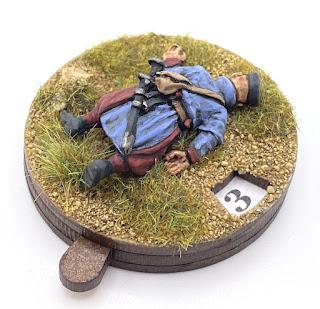
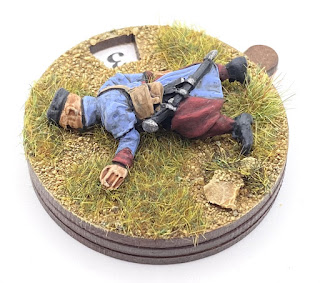
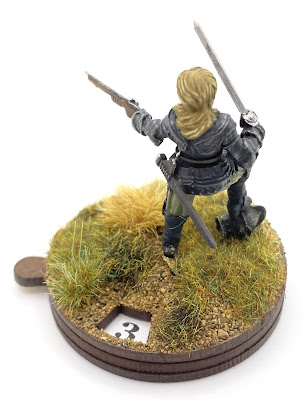
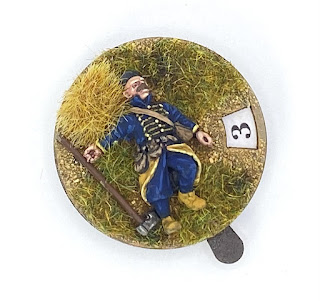
TAG Haiduk Casualty on a Warbases Counter Base


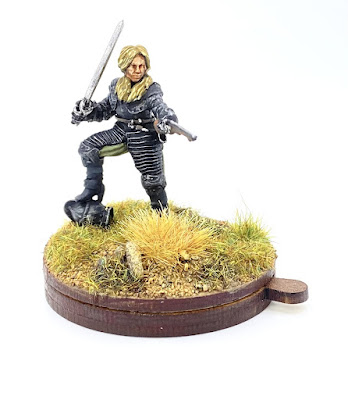
Wargamer 1666 Character ‘Octavia’ on a Warbases Counter Base

To go with the command bases I also painted a couple of figures to go on Warbases casualty counter bases. The first is an out of action Haiduk, and the second is a slight whim of fancy. I saw this figure for the 1666 game from Wargamer (https://www.wargameruk.com/shop/anno-domini-1666/2) and thought it would be fun to paint. I’m also short of casualty makers for my cavalry units and so an unhorsed cuirassier figure should be just the thing.


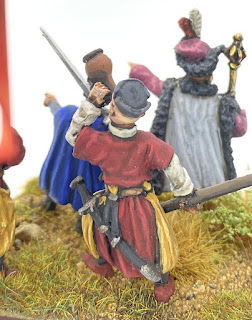
Some ‘Dutch Courage’ for this Tenth-Man.

The next unit on the painting bench is going to be from the new 1898 Thirty Years War cavalry range. I’m looking forward to it.

Until next time,

Andy @ The Friends of General Haig 


Sunday, 30 January 2022

More Haiduks

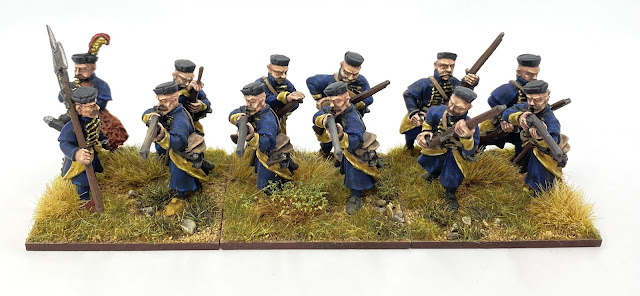
This blog post looks at the latest unit for my Polish Lithuanian Commonwealth army; another unit of Polish Haiduks. 

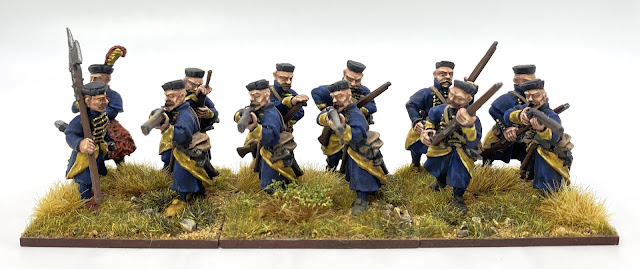
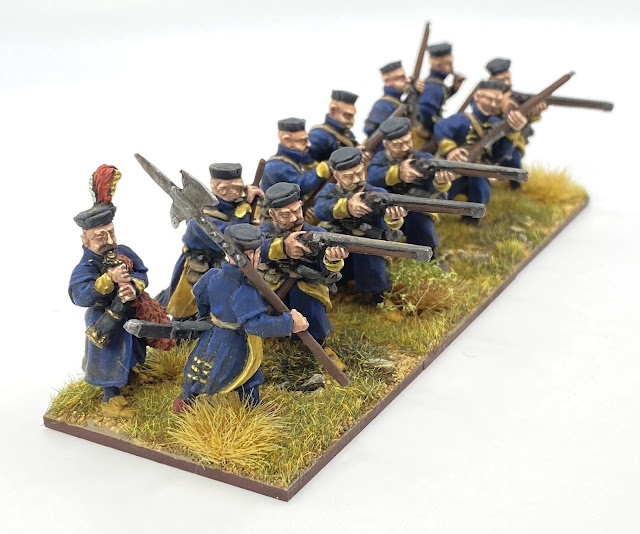
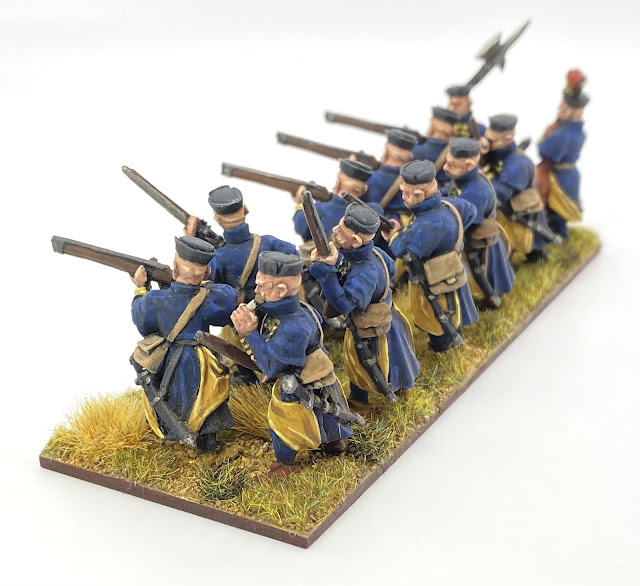
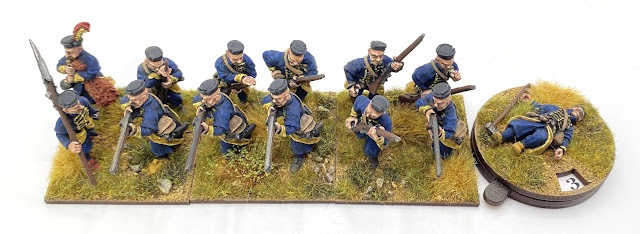
Polish Haiduks from Wargames Foundry and TAG in 28mm

In this earlier post (https://theviaregia.blogspot.com/2021/11/polish-haiduks.html) I described the background to these native Polish infantry. This unit is more of the same, with the figures also being from Wargames Foundry and The Assault Group (TAG) in 28mm.  

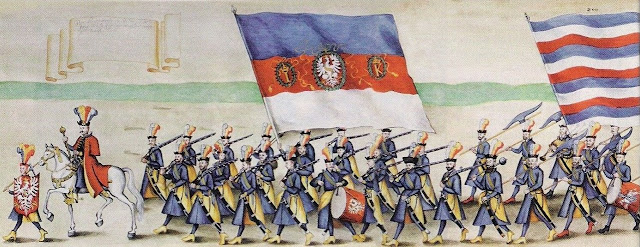
Extract from the contemporary ‘Stockholm Roll’ showing Haiduks

I chose a different paint scheme this time, with this unit being based on a unit of Haiduks in the Stockholm Scroll. This amazing 15m long work of art depicts the ceremonial entry of the wedding procession of King Sigismund III and Archduchess Constance of Austria into Kraków on 4th December 1605. The picture includes many military units, including Haiduks. This needs to be used with caution of course as this is a ceremonial procession and not a battlefield. It is nevertheless very useful. There is a great Wikimedia page with details of many parts of the scroll here: https://commons.m.wikimedia.org/wiki/Category:Stockholm_Roll

This unit of Haiduks on the scroll have a nice dark blue uniform with a yellow lining on the outer coat. The figures in the scroll don’t seem to have braiding on their coats but as my model soldiers do, I have given them braiding in the same contrasting yellow. 

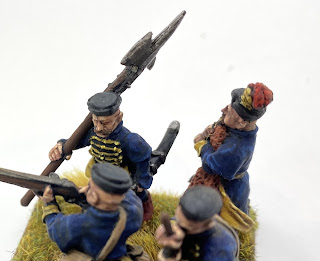
A ‘tenth man’ and musician.

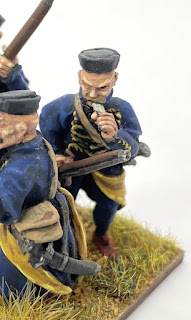
Biting open a cartridge.


Casualty Marker from Warbases

I painted the figures using the same approach as described in the previous post above. I think they’ve come out alright. I’ve added a casualty marker for the unit as well, using one of the handy counter bases from Warbases. 


The scroll shows further Haiduk uniforms and so I will be trying these in the future. Next up, my Haiduks need some commanders.

Until next time

Andy @ The Friends of General Haig. 

Tuesday, 30 November 2021

Polish Haiduks

In this blog post I cover a new addition to my Polish-Lithuanian Commonwealth army, a unit of Polish Haiduks.

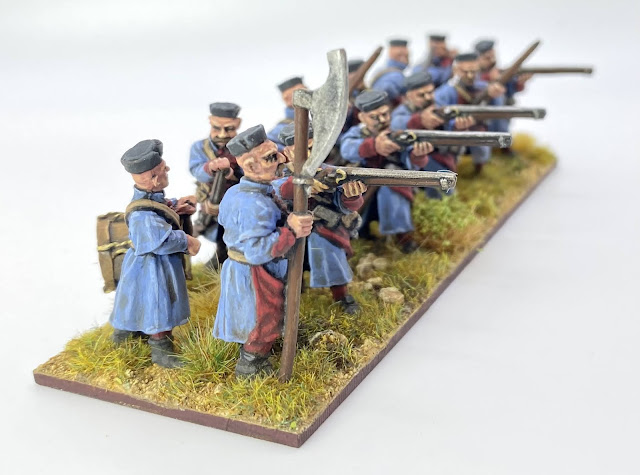
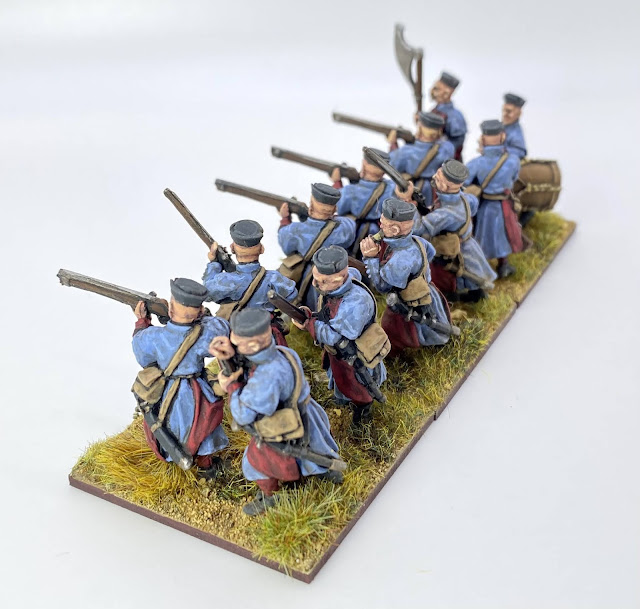
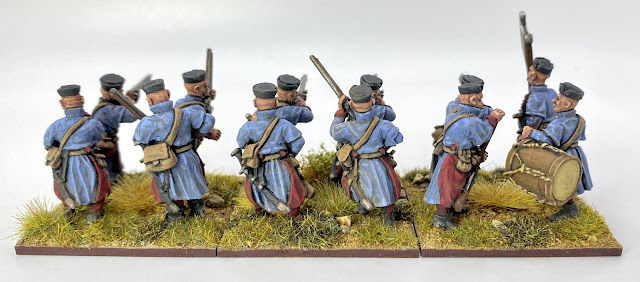
Polish Haiduks - 28mm from Wargames Foundry & TAG

My painting progress over the summer and autumn has been almost nonexistent and so I am really pleased to be back in the saddle, so to speak!

Haiduk (or Hajduk) was a term used in this period for native Polish and Hungarian infantry. They were armed with muskets and provided fire support to the cavalry arm in open battles, as well as providing the ability to hold fortifications, or indeed assault enemy fortifications. Along with their firearms they were equipped with sabres and hand axes, which they used when involved in hand to hand melee.  They were typically uniformed, and their coats (called a zupan) were usually lined in contrasting colours. The Haiduks therefore provide a distinctive and iconic part of any Polish force, and I have been looking forward to getting some of these on the painting table since I started my Polish army.

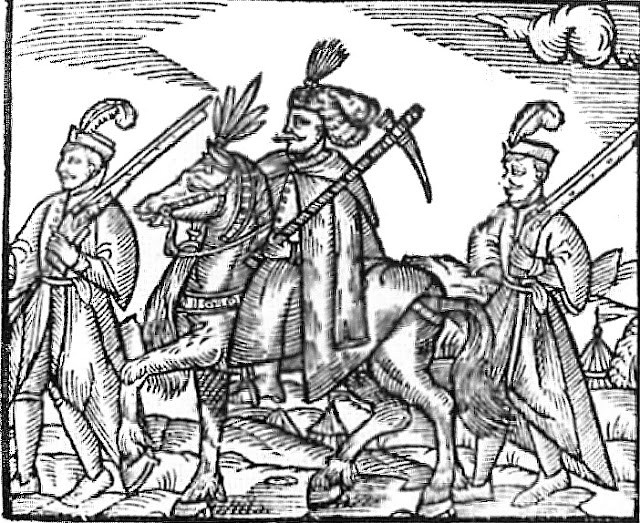
Contemporary picture showing a Polish noble escorted by his Haiduk bodyguard.

The Polish infantry were recruited, like the cavalry, through the issuing of a commission to a Rotmistrz.  The Rotmistrz had to recruit the required number of  men as instructed in their commission, and they typically did this in their own home region, looking for volunteers amongst the townsfolk and peasants. The infantry were formed in to banners (companies) with a set of officers, and each tenth man was armed with a long axe or halberd. These tenth men acted as NCOs, directing the rank and file, and were also meant to act as a defence against cavalry with their pole-arms.  

My 28mm miniature Haiduks have been recruited from Wargames Foundry and The Assault Group (TAG).  Like their Hussars, the Foundry Haiduks are a very old range, and so a little on the short side being closer to 25mm than 28mm, but they fit in ok with TAG to my eye. The details on the Foundry figures hold up well; all part of the Perry sculpting genius! 

As well as a tenth-man with his halberd, I have also added a drummer to the unit. Various types of musicians are shown in Haiduk units including fifers, pipers and drummers. 

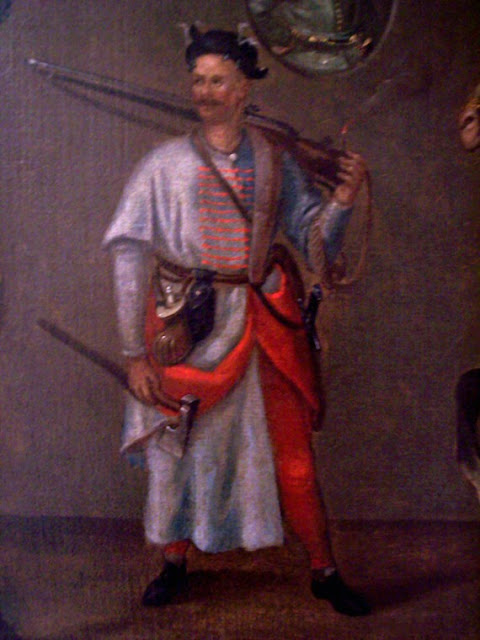
Contemporary colour picture of a Polish Haiduk

This first unit is painted up in one of the most common colour combinations shown for Haiduks in this period; a lightish blue coat with deep red lining. I want to acknowledge the fabulous painting tutorial by Sonic Sledgehammer that I used as inspiration for this unit, after I saw Troy painting a TYW Bavarian musketeer in just the shade of blue I wanted to use (see the tutorial here: https://youtu.be/ZqpHAV_A1U0). 

I plan to add a few more units like this to the army, and also some separate command bases. The Stockholm Scroll (https://commons.wikimedia.org/wiki/Category:Stockholm_Roll) shows a number of Haiduk units, with a variety of uniform colours and I hope to represent these with the future units. 

Until next time!

Andy @ The Friends of General Haig